Gutenberg 18 - Year 218 (Positivist)
The weekend after Cropredy, Pixie and I anticipated a Saturday night in--so we hoofed it to the video shop for a rental. We chose Capote, as we've both been wanting to see it for some time.
The story centers around writer Truman Capote (played to near perfection by the impeccable Philip Seymour Hoffmann), who is looking to follow up Breakfast At Tiffany's. The opening scenes of the film concern the brutal murder of a family in rural Kansas in 1959 and the manhunt which follows. Capote is shown at a swank New York writers' party, the toast of his circle of fellow scribblers. This contrast will be returned to often in the film. Nothing is shown of Capote's actual plans for his next book, but I think it was almost expected that he would crank out another sorta light-hearted affair like "..Tiffany's". This all changes as he spots a small article in the paper and clips it out. He phones his agent and tells him he's going to Kansas to write about the murders for a magazine piece.
Capote travels with his friend, writer Harper Lee (played by the also reliable Catherine Keener)--the time-frame of the film takes place before and then after her breakthrough novel, To Kill A Mockingbird, is published. They arrive in Kansas and try to get the inside story, but are treated with polite distance. A press conference is held and overseen by local lawman Alvin Dewey (played with downhome panache by Chris Cooper), who is confident that the killers will be found. Within days of the press conference, the killers are apprehended and brought to Kansas to face trial. By this time, Capote has ingratiated himself with the locals, regaling them with tales of Hollywood and his New-Yawk-via-Loosianna wit. He visits the sheriff's house one day and finds one of them, Perry Smith, locked in a cell within the house. The two eye each other warily, but there is a connection made which impacts the outcome of both Capote's life and his work.
Eventually, Smith and Hickock go to trial and are given the death penalty. Capote, realising that he hasn't found out exactly what happened on the night of the murders, tells them that he will find a lawyer to help with their appeal. Clutching his notebooks and early drafts, he heads back to his New York life of parties and notoriety. Some time later, he decides to visit them in Leavenworth prison, partly to be true to his budding friendship with Smith and partly to get more background story for his book (which he's decided to call "In Cold Blood"). These scenes seem to be some of the best in the film to me, as both use their symbiotic relationship to try and gain what each wants the most--Smith his freedom and Capote his story. Smith's attempts are, of course, doomed from the outset, making his cloying pleas to Truman to "find us another lawyer" all the more tragic. There also seems to be an erotic element, as Capote clearly fancies Smith's rugged good looks and "uncouth ways". They also bond over shared stories of rough, disappointing childhoods.
A few years go by and Capote is no closer to finishing his book. There's a nice contrast with Smith's imprisonment in Leavenworth and Capote's imprisonment to the creative process and missed deadlines. He stops answering Smith's letters and retreats to Spain for a time. Just as he fears he is going completely mad, Capote hears that Smith and Hickock's final appeal was turned down and they are to be executed. He makes a few last visits to the prison and on one of these, Smith finally tells him what happened on the night of the murders--which makes for a greusome, violent flashback. It turns out that Smith had caused the carnage--though he hinted throughout the film that it was Hickock who cracked and ordered the family killed. Truman promises to Smith that he will attend the execution--and he does so, in a teary and sober moment--watching Smith's body hang from the gallows in a dreary, warehouse-like building.
Of course, "In Cold Blood", published in 1965, went on to become a literary smash and Capote was feted even more than he had been for "Breakfast At Tiffany's". All this came with a price, though, and he never really recovered from the whole experience. In fact, he never published another full-length novel until his untimely death in 1984. His slow decline in the late 60s and 1970s must have been painful to watch, for his close friends.
I really enjoyed "Capote"--as I didn't know a lot about the man (I confess to never reading anything by him--though I've seen the film of "Breakfast.."--though that doesn't count). He's just one of those famous writers that are canonised, but don't seem to be widely read anymore. Philip Seymour Hoffmann's performance makes the film, as do most of the supporting cast, otherwise it could've well been just a documentary. There's been a slew of "biopics" out of Hollow-wood over the past five to ten years--but I would heartily recommend "Capote", it definitely seems to be one of the better ones to me. I may actually read some of Capote's work as a result of watching this film.
29 August 2006

27 August 2006
Brief Lessons In Ancient Welsh History
There was a time, my children, when druids and sprites, sea-goddesses and bards of the old tongue, walked the mountains and shores of Wales. There was also a time when there were musicians, older than the oldest oaks and yews and they were NOT called Super Furry Animals, Manic Street Preachers or Gorky's Zygotic Mynci. Among these ancients there were two of which I shall speak today and they were called Man and John Cale.
A new compilation has just been released called Keep On Crinting: The Liberty/UA Anthology. It features choice tracks by the awesome Man, who I consider to be the greatest band to ever come out of Wales, bar none. Covering the ground from their self-titled third album to their final UA recording, the live Maximum Darkness, this double disc set shows Man at the peak of their powers. Heavy on live, extended tracks, we are reminded that Man were incredible improvisers, with such extended work-outs as 'C'mon'(with male voice choir!) and 'Many Are Called But Few Get Up'. The inter-play between the guitars of the various members (there were a few line-up changes) is truly thrilling but the star of the show for me is Mickey Jones who was an ever-present until illness made him go into semi-retirement just a few years ago. Mickey is the Welsh Jerry Garcia, only better! There often seems to be a creative tension between the band's 'space-rock' tendencies and their commercial sense which gave birth to the finest achievement, the Rhinos, Winos & Lunatics album in 1974. The whole of the second side of this album is featured here, along with Malcolm Morley's lovely 'California Silks & Satins' (they really should have come from SF). Man brought the West Coast to Wales and gave much back of their own take on psych-tinged rock. Buy this (or get someone to give it to you!)
John Cale is another Welsh giant. Even if he is connected far more with the Velvet Underground and the avant-garde NY scene, he never lost his sense of Welshness even if this Welsh in a wider Euro context. His classic 1973 album, Paris 1919 has recently been reissued with bonus tracks and proves that this is one of THE great records of the 70's. In the studio with a handful of Little Feat players, Cale still manages to create an utterly European album that seems to fill the air with a sense of fading glory. The arrangements on every track are impeccable, my particular favourites being 'Andalucia' and 'Paris 1919'. The bonus tracks are well worth having too as the different arrangements and simpler mixes really bring something new to the record. Celtic genius.
A new compilation has just been released called Keep On Crinting: The Liberty/UA Anthology. It features choice tracks by the awesome Man, who I consider to be the greatest band to ever come out of Wales, bar none. Covering the ground from their self-titled third album to their final UA recording, the live Maximum Darkness, this double disc set shows Man at the peak of their powers. Heavy on live, extended tracks, we are reminded that Man were incredible improvisers, with such extended work-outs as 'C'mon'(with male voice choir!) and 'Many Are Called But Few Get Up'. The inter-play between the guitars of the various members (there were a few line-up changes) is truly thrilling but the star of the show for me is Mickey Jones who was an ever-present until illness made him go into semi-retirement just a few years ago. Mickey is the Welsh Jerry Garcia, only better! There often seems to be a creative tension between the band's 'space-rock' tendencies and their commercial sense which gave birth to the finest achievement, the Rhinos, Winos & Lunatics album in 1974. The whole of the second side of this album is featured here, along with Malcolm Morley's lovely 'California Silks & Satins' (they really should have come from SF). Man brought the West Coast to Wales and gave much back of their own take on psych-tinged rock. Buy this (or get someone to give it to you!)
John Cale is another Welsh giant. Even if he is connected far more with the Velvet Underground and the avant-garde NY scene, he never lost his sense of Welshness even if this Welsh in a wider Euro context. His classic 1973 album, Paris 1919 has recently been reissued with bonus tracks and proves that this is one of THE great records of the 70's. In the studio with a handful of Little Feat players, Cale still manages to create an utterly European album that seems to fill the air with a sense of fading glory. The arrangements on every track are impeccable, my particular favourites being 'Andalucia' and 'Paris 1919'. The bonus tracks are well worth having too as the different arrangements and simpler mixes really bring something new to the record. Celtic genius.
23 August 2006
A Beacon From Mars
 Setting Orange, Bureaucracy 16 - Year Of Our Lady Of Discord 3172
Pixie had an e-mail sent to her a few weeks ago, which she forwarded on to me. The text reads:
"Planet Mars will be the brightest in the night sky starting August. Itwill look as large as the full moon to the naked eye. This will cultimate on Aug. 27 when Mars comes within 34.65M miles of Earth.
Be sure to watch the sky on Aug. 27 12:30 am. It will look like TheEarth has 2 Moons. Don't Miss it.....
The next time Mars may come this close is in 2287.
Share this with ur friends as NO ONE ALIVE TODAY will ever see it .................. again."
I dunno--it seems like a hoax to me. Still, I may be watching out for it. Of course, with the way the weather's been--it'll probably be raining that night.
14 August 2006
Cropredy Capers 2006
17 Rajab - Year 1427
We're back from the festival and it was generally a good time, but marred by a few unexpected events--that and some of the music just didn't seem to me to be as quality as last year. I won't post a diary like I did last year, in the interest of not boring the reader. I'll post highlights (and lowlights) of each day.
Thursday (10th August): After setting up camp, our crew headed down to the main stage area. We missed the wRants, so I can't tell you how they were. PJ Wright came out and played a set of trad. folk stuff--not bad, but not spectacular, either. I'd have thought he'd throw in a Bob Dylan cover, as he's the singer in The Dylan Project--a Fairport off-shoot, but no..not a sausage. Feast Of Fiddles provided the best set of Thursday, with six or seven fiddlers on-stage (including Chris Leslie and Ric Sanders of Fairport) sawing away. They coaxed some wonderful textures from their instruments and they even had Pixie dancing at one point (I kid you not). Their closing tune was a credible version of Fairport's Battle Of The Somme (found on the Live At The L.A. Troubadour album) and I was impressed at their arrangement (though I still missed Richard Thompson's sliding, gliding guitar notes). The musical low point hit with Chris Newman and Maire Ni Chathasaigh (pronounced 'Ha-Ha-Sig, if you're interested), an Anglo-Irish duo whose music would fit better in a small tea room than an outdoor festival. While they gamely tried to engage the crowd, Newman's guitar plucking and Chathasaigh's harp couldn't provide much spark. Then Chathasaigh sang in a strange ululating fashion that sounded a bit off-key and that sealed it for the audience. They were given some polite applause to send them on their way. Steeleye Span closed the night, not exactly in a triumphal manner--but at least it made up for the previous act. Maddy Prior's pipes still can hit most of the notes and Peter Knight's fiddle-playing is up to scratch. They've recruited Ken Nicol from the Albion Band on guitar and Liam Genockey on drums, for this line-up. The set seemed to go on a bit too long for my liking--but then suddenly they finished with a lively version of All Around My Hat. The nadir of the festival also happened during Steeleye's set when some thoughtful individuals (who had actually purchased tickets) decided to rummage through tents in the various camping fields and relieve people of some of their valuables. Security were able to thwart the thieves after a time, but quite a few festival-goers were robbed before then. That kind of thing puts a damper on the good-natured vibe of a place like Cropredy.
Friday (11th August): Shameless Quo opened the day at noon--we missed them, but we heard a bit walking into the arena. They played all of the Quo's "boooogie" stuff, no Pictures Of Matchstick Men or anything from Ma Kelly's Greasy Spoon..meh. Bodega were next--another Irish/Scots combo. They won the Radio 2 Young Folk Award for this year. Competent musicians and some nice reels, but again, a feeling of deja vu crept in after a few tunes. I was disappointed with Then Came The Wheel, despite their pedigree (members of Maddy Prior's band, Albion Band and so on)--they played sub-Dire Straits blues-rock and I took to calling them "Reinventing The Wheel". Ashley Hutchings, original bassist with Fairport, was up next with his new-ish group, Rainbow Chasers. While it was cool to see 'The Guv'nor' still up there, jammin' away--he sorta resembled a creepy older uncle, as the other band members are probably half his age. The lyrics of some of the tunes left a lot to be desired also. They played a tribute song to Nick Drake--and it was pretty much Hutchings' anecdote about meeting Drake, set to music...I'm not joking. Speaking of pedigree, Deborah Bonham was on-stage after Rainbow Chasers, and yes, she's related to that John Bonham. Almost needless to say, her set was heavy on the blooze-rock and they were easily the loudest act of the fest. She's got a good rock-n-raunch voice, but really, does the world need another Janis Joplin or Suzi Quatro? They did perform a decent version of Zep's The Battle Of Evermore, with Deborah taking both Robert Plant's and Sandy Denny's part--and their encore was (natch) Zep's Rock And Roll. When Deb's band cleared off, Frank Skinner (yes, the comedian) walked onstage to do announce that the 1969 line-up of Fairport were receiving gold records from Island Records for their ground-breaking Liege & Lief album. Skinner did a bit of stand-up first--with the best line being that the crowd's attire was "Wicker Man chic". They managed to round up almost the complete '69 line-up--with Richard Thompson, Dave Mattacks, Ashley Hutchings, Simon Nicol ambling out to accept their awards. Chris While accepted Sandy Denny's and Ric Sanders accepted Dave Swarbrick's. Flook, another trad. Irish group, bookended Bodega with some sprightly bodhran playing and flute work..and then it was time for "Johnny Too Bad", John Martyn. I do admit to being slightly disappointed with his set. It's not entirely his fault, as he is confined to a wheelchair now, much like Robert Wyatt--and it's tough to give a charismatic performance in that state. When he dug into the Solid Air songbook, he showed he's still got some spark--with brilliant versions of May You Never, I Don't Want To Know and the title track. The rest of the set was made up of newer tunes and a couple of re-arranged One World selections. He was having problems with the effects gear for his guitar--so there were a few delays. He finished with a cover of an old jazz song--possibly originally recorded by Billie Holiday--it was a class touch and well done. We skipped Graham Gouldman & Friends, billed as 10cc (which Pixie changed to "1cc")--but from what I could hear, they performed credible versions of 10cc's tunes, like The Things We Do For Love, as well as Gouldman-penned hits from the 60s, such as The Hollies' Bus Stop. No robberies reported in our field for Friday night, thankfully.
Saturday (12th August): We cheated a bit on the festival experience and set out for Pixie's brother's house (about 20 minutes away from the site) for hot showers and bacon sarnies for breakfast (not Pixie, as she's vegetarian). We decided to miss out on Richard Digance's "Family Folk Hour" or whatever he's calling it now--it just seems really bland and really trad. to me. We also missed Sam Holmes & Her Band--I don't know who she is and the programme doesn't give her much of a description, so she's an enigma at this point. Returning back to the festival site--Pixie and I helped her brother and his family disassemble their tent, as they were going to leave a bit later in the afternoon. While we were doing that, Dave Swarbrick's latest venture, Lazarus (a joke on Swarb's medical conditions the past few years), took it to the stage. A trio, with Swarb on fiddle, Kevin Dempsey and Maartin Allcock on guitars, they played for an hour and we caught the final tune while walking toward the stage area. I regretted missing Swarb in action--but I figured he would join in on Fairport's set later in the evening. He didn't. King Pleasure & The Biscuit Boys were up after that. They're a six-piece 50s rock-n-roll/jump blues retro band--straight down to the matching blue zoot suits and names like Shark Van Shtoop and Crab-Claw Tromans. I was thinking "Oh no--it's Sha Na Na time" but they got the crowd dancing and clapping and I had to give in to the sheer exuberance of their performance..and Cropredy this year desparately needed a pick-me-up of any sort. Dervish took the stage after King Pleasure and various Biscuit Boys vacated--and while they are deft musicians, the Irish reel overload was kicking in at this point. Singer Cathy Jordan put in an energetic act and the band followed behind, but it was all too much jigging and bodhran-ing for one weekend. Glen Tilbrook, formerly of Squeeze, was the penultimate act. He's the subject of an indie film documentary, which followed him around as he toured the U.S. last year. He played some mannered folk-style pop tunes and his stage presence was amiable enough, with his long in-between song banter. He would say "Cheers, luvs" every time he took a sip from his beer. As seems to be the way..his own songs were met with mild enthusiasm and the old Squeeze tunes drew the roars from the crowd. Finally, Fairport Convention hit the stage sometime after 9 p.m. They played a good mixture of old and newer tunes--including a surprise The Journeyman's Grace, from Angel Delight. I also heard Sir Patrick Spens, Tam Lin and The Deserter. Chris While joined the Fairports to sing Sandy Denny's Who Knows Where The Time Goes? and back-up on "The Deserter". I admit to losing some of my enthusiasm when they played some of the newer stuff--but it doesn't seem to have the quality of the "classic" years. That being said, they can still rip it up when they want to--as when they performed The Lark In The Morning medley. Glen Tilbrook also joined them for a mini-set of his tunes--the highlight being Squeeze's Tempted (covered by Richard Thompson--which was mentioned by Simon Nicol). Everything wound up at midnight, with the obligatory Meet On The Ledge, but we were already back at the tent by then. The next morning, in the rain, we packed up our gear and headed home. The end of another Cropredy.
We're back from the festival and it was generally a good time, but marred by a few unexpected events--that and some of the music just didn't seem to me to be as quality as last year. I won't post a diary like I did last year, in the interest of not boring the reader. I'll post highlights (and lowlights) of each day.
Thursday (10th August): After setting up camp, our crew headed down to the main stage area. We missed the wRants, so I can't tell you how they were. PJ Wright came out and played a set of trad. folk stuff--not bad, but not spectacular, either. I'd have thought he'd throw in a Bob Dylan cover, as he's the singer in The Dylan Project--a Fairport off-shoot, but no..not a sausage. Feast Of Fiddles provided the best set of Thursday, with six or seven fiddlers on-stage (including Chris Leslie and Ric Sanders of Fairport) sawing away. They coaxed some wonderful textures from their instruments and they even had Pixie dancing at one point (I kid you not). Their closing tune was a credible version of Fairport's Battle Of The Somme (found on the Live At The L.A. Troubadour album) and I was impressed at their arrangement (though I still missed Richard Thompson's sliding, gliding guitar notes). The musical low point hit with Chris Newman and Maire Ni Chathasaigh (pronounced 'Ha-Ha-Sig, if you're interested), an Anglo-Irish duo whose music would fit better in a small tea room than an outdoor festival. While they gamely tried to engage the crowd, Newman's guitar plucking and Chathasaigh's harp couldn't provide much spark. Then Chathasaigh sang in a strange ululating fashion that sounded a bit off-key and that sealed it for the audience. They were given some polite applause to send them on their way. Steeleye Span closed the night, not exactly in a triumphal manner--but at least it made up for the previous act. Maddy Prior's pipes still can hit most of the notes and Peter Knight's fiddle-playing is up to scratch. They've recruited Ken Nicol from the Albion Band on guitar and Liam Genockey on drums, for this line-up. The set seemed to go on a bit too long for my liking--but then suddenly they finished with a lively version of All Around My Hat. The nadir of the festival also happened during Steeleye's set when some thoughtful individuals (who had actually purchased tickets) decided to rummage through tents in the various camping fields and relieve people of some of their valuables. Security were able to thwart the thieves after a time, but quite a few festival-goers were robbed before then. That kind of thing puts a damper on the good-natured vibe of a place like Cropredy.
Friday (11th August): Shameless Quo opened the day at noon--we missed them, but we heard a bit walking into the arena. They played all of the Quo's "boooogie" stuff, no Pictures Of Matchstick Men or anything from Ma Kelly's Greasy Spoon..meh. Bodega were next--another Irish/Scots combo. They won the Radio 2 Young Folk Award for this year. Competent musicians and some nice reels, but again, a feeling of deja vu crept in after a few tunes. I was disappointed with Then Came The Wheel, despite their pedigree (members of Maddy Prior's band, Albion Band and so on)--they played sub-Dire Straits blues-rock and I took to calling them "Reinventing The Wheel". Ashley Hutchings, original bassist with Fairport, was up next with his new-ish group, Rainbow Chasers. While it was cool to see 'The Guv'nor' still up there, jammin' away--he sorta resembled a creepy older uncle, as the other band members are probably half his age. The lyrics of some of the tunes left a lot to be desired also. They played a tribute song to Nick Drake--and it was pretty much Hutchings' anecdote about meeting Drake, set to music...I'm not joking. Speaking of pedigree, Deborah Bonham was on-stage after Rainbow Chasers, and yes, she's related to that John Bonham. Almost needless to say, her set was heavy on the blooze-rock and they were easily the loudest act of the fest. She's got a good rock-n-raunch voice, but really, does the world need another Janis Joplin or Suzi Quatro? They did perform a decent version of Zep's The Battle Of Evermore, with Deborah taking both Robert Plant's and Sandy Denny's part--and their encore was (natch) Zep's Rock And Roll. When Deb's band cleared off, Frank Skinner (yes, the comedian) walked onstage to do announce that the 1969 line-up of Fairport were receiving gold records from Island Records for their ground-breaking Liege & Lief album. Skinner did a bit of stand-up first--with the best line being that the crowd's attire was "Wicker Man chic". They managed to round up almost the complete '69 line-up--with Richard Thompson, Dave Mattacks, Ashley Hutchings, Simon Nicol ambling out to accept their awards. Chris While accepted Sandy Denny's and Ric Sanders accepted Dave Swarbrick's. Flook, another trad. Irish group, bookended Bodega with some sprightly bodhran playing and flute work..and then it was time for "Johnny Too Bad", John Martyn. I do admit to being slightly disappointed with his set. It's not entirely his fault, as he is confined to a wheelchair now, much like Robert Wyatt--and it's tough to give a charismatic performance in that state. When he dug into the Solid Air songbook, he showed he's still got some spark--with brilliant versions of May You Never, I Don't Want To Know and the title track. The rest of the set was made up of newer tunes and a couple of re-arranged One World selections. He was having problems with the effects gear for his guitar--so there were a few delays. He finished with a cover of an old jazz song--possibly originally recorded by Billie Holiday--it was a class touch and well done. We skipped Graham Gouldman & Friends, billed as 10cc (which Pixie changed to "1cc")--but from what I could hear, they performed credible versions of 10cc's tunes, like The Things We Do For Love, as well as Gouldman-penned hits from the 60s, such as The Hollies' Bus Stop. No robberies reported in our field for Friday night, thankfully.
Saturday (12th August): We cheated a bit on the festival experience and set out for Pixie's brother's house (about 20 minutes away from the site) for hot showers and bacon sarnies for breakfast (not Pixie, as she's vegetarian). We decided to miss out on Richard Digance's "Family Folk Hour" or whatever he's calling it now--it just seems really bland and really trad. to me. We also missed Sam Holmes & Her Band--I don't know who she is and the programme doesn't give her much of a description, so she's an enigma at this point. Returning back to the festival site--Pixie and I helped her brother and his family disassemble their tent, as they were going to leave a bit later in the afternoon. While we were doing that, Dave Swarbrick's latest venture, Lazarus (a joke on Swarb's medical conditions the past few years), took it to the stage. A trio, with Swarb on fiddle, Kevin Dempsey and Maartin Allcock on guitars, they played for an hour and we caught the final tune while walking toward the stage area. I regretted missing Swarb in action--but I figured he would join in on Fairport's set later in the evening. He didn't. King Pleasure & The Biscuit Boys were up after that. They're a six-piece 50s rock-n-roll/jump blues retro band--straight down to the matching blue zoot suits and names like Shark Van Shtoop and Crab-Claw Tromans. I was thinking "Oh no--it's Sha Na Na time" but they got the crowd dancing and clapping and I had to give in to the sheer exuberance of their performance..and Cropredy this year desparately needed a pick-me-up of any sort. Dervish took the stage after King Pleasure and various Biscuit Boys vacated--and while they are deft musicians, the Irish reel overload was kicking in at this point. Singer Cathy Jordan put in an energetic act and the band followed behind, but it was all too much jigging and bodhran-ing for one weekend. Glen Tilbrook, formerly of Squeeze, was the penultimate act. He's the subject of an indie film documentary, which followed him around as he toured the U.S. last year. He played some mannered folk-style pop tunes and his stage presence was amiable enough, with his long in-between song banter. He would say "Cheers, luvs" every time he took a sip from his beer. As seems to be the way..his own songs were met with mild enthusiasm and the old Squeeze tunes drew the roars from the crowd. Finally, Fairport Convention hit the stage sometime after 9 p.m. They played a good mixture of old and newer tunes--including a surprise The Journeyman's Grace, from Angel Delight. I also heard Sir Patrick Spens, Tam Lin and The Deserter. Chris While joined the Fairports to sing Sandy Denny's Who Knows Where The Time Goes? and back-up on "The Deserter". I admit to losing some of my enthusiasm when they played some of the newer stuff--but it doesn't seem to have the quality of the "classic" years. That being said, they can still rip it up when they want to--as when they performed The Lark In The Morning medley. Glen Tilbrook also joined them for a mini-set of his tunes--the highlight being Squeeze's Tempted (covered by Richard Thompson--which was mentioned by Simon Nicol). Everything wound up at midnight, with the obligatory Meet On The Ledge, but we were already back at the tent by then. The next morning, in the rain, we packed up our gear and headed home. The end of another Cropredy.
12 August 2006
Damaged : Lambchop (City Slang)
'Here's a little story 'bout regret
Doesn't have an ending, it's not finished yet
But from what I know this far, it's just a peep at who we are
And an incomplete sentence that you said'
(Kurt Wagner, 2006)
It's been a two year wait since Awcmon/Noyoucmon but now we have the fruits of Lambchop's labour in the form of their new album, Damaged. I was fortunate to be able to get my copy a couple of days ahead of the release date, thanks to those brilliant fellows down at Diverse Records in Newport. Having listened to it a few times already today, here are my initial observations.
Damaged is 10 songs long with 'interludes'. These linking, rather airy and brief pieces, give the album an organic feel as one track bleeds into the next. That's not say we are dealing with a prog-style concept-monster here but there does seem to be common threads between many of the songs. There is the problem of true communication between people:
'Turning to her husband she so carefully said
My dear what put that idea in your head?'
And there are the ludicrous demands that relationships inevitably put on individuals:
'And I promise that I won't live without you
And I promise that I won't be that mean
These stupid promises are accumulating
In a grossly unwholesome scene'
As usual, Kurt Wagner places all these human problems in the context of the smallest parts of everyday living, which makes the tragedy all the greater. In 'I Would Have Waited Here All Day', a song that was originally written for a Candi Staton album, we see the detritus of our lives in the coffee cups and dirty dishes left in the sink. The female protagonist's lover walks 'dripping wet from a midday shower' and dries off his 'dick'. Makes you understand why Candi turned this one down. The song is marvellous and is soaked through with the pain of our unfulfilled expectations.
Wagner's eye for the wonder of the mundane is beautifully realised in the opening track, 'Paperback Bible', where he seems to be compiling an inventory of 'stuff' to acquire and other 'stuff' to get rid of, along with things that other people have to offer. Is this a weird market of the lost? It's all accomplished in a near-conversational style that wraps the song in a loving, demotic tongue:
'Yeah I'd like to find
A twenty seven inch color TV
Has to be non working
An RCA cause I need the parts'
Musically, the album is something of a step back to the minimalism of Is A Woman but the sound is enriched by the predominance of strings (of guitar and 'quartet' variety) over piano. This tends to sweeten the bitter pill in the lyrics but to good effect. Where Lambchop's musical landscape lies these days is less easy to define than in the purer 'country-soul' influences on What Another Man Spills or Nixon but this is not a criticism. Lambchop are confident in their ability to take the volume and the emotions 'down' without losing any feeling in the process. In fact, the quieter they get, the more effective they are. The secrets of Lambchop music often rest in the smallest of detail. You are meant to listen hard.
Damaged is a more than worthy addition to the superb catalogue of idiosyncratic music that Lambchop have developed since the early '90s. Long may they carry on whispering in our ears.
Doesn't have an ending, it's not finished yet
But from what I know this far, it's just a peep at who we are
And an incomplete sentence that you said'
(Kurt Wagner, 2006)
It's been a two year wait since Awcmon/Noyoucmon but now we have the fruits of Lambchop's labour in the form of their new album, Damaged. I was fortunate to be able to get my copy a couple of days ahead of the release date, thanks to those brilliant fellows down at Diverse Records in Newport. Having listened to it a few times already today, here are my initial observations.
Damaged is 10 songs long with 'interludes'. These linking, rather airy and brief pieces, give the album an organic feel as one track bleeds into the next. That's not say we are dealing with a prog-style concept-monster here but there does seem to be common threads between many of the songs. There is the problem of true communication between people:
'Turning to her husband she so carefully said
My dear what put that idea in your head?'
And there are the ludicrous demands that relationships inevitably put on individuals:
'And I promise that I won't live without you
And I promise that I won't be that mean
These stupid promises are accumulating
In a grossly unwholesome scene'
As usual, Kurt Wagner places all these human problems in the context of the smallest parts of everyday living, which makes the tragedy all the greater. In 'I Would Have Waited Here All Day', a song that was originally written for a Candi Staton album, we see the detritus of our lives in the coffee cups and dirty dishes left in the sink. The female protagonist's lover walks 'dripping wet from a midday shower' and dries off his 'dick'. Makes you understand why Candi turned this one down. The song is marvellous and is soaked through with the pain of our unfulfilled expectations.
Wagner's eye for the wonder of the mundane is beautifully realised in the opening track, 'Paperback Bible', where he seems to be compiling an inventory of 'stuff' to acquire and other 'stuff' to get rid of, along with things that other people have to offer. Is this a weird market of the lost? It's all accomplished in a near-conversational style that wraps the song in a loving, demotic tongue:
'Yeah I'd like to find
A twenty seven inch color TV
Has to be non working
An RCA cause I need the parts'
Musically, the album is something of a step back to the minimalism of Is A Woman but the sound is enriched by the predominance of strings (of guitar and 'quartet' variety) over piano. This tends to sweeten the bitter pill in the lyrics but to good effect. Where Lambchop's musical landscape lies these days is less easy to define than in the purer 'country-soul' influences on What Another Man Spills or Nixon but this is not a criticism. Lambchop are confident in their ability to take the volume and the emotions 'down' without losing any feeling in the process. In fact, the quieter they get, the more effective they are. The secrets of Lambchop music often rest in the smallest of detail. You are meant to listen hard.
Damaged is a more than worthy addition to the superb catalogue of idiosyncratic music that Lambchop have developed since the early '90s. Long may they carry on whispering in our ears.
09 August 2006
A Cropredying We Shall Go

4 Lucy - 39 p.r.S.P.
Pixie and I are off to the annual Fairport Convention gathering near a village outside of Banbury, Oxfordshire. Yes, it's Cropredy time again.
The line-up doesn't seem quite as spectacular as last year's, but there's plenty of folk-rock goodness to keep us entertained for the three days. Steeleye Span are playing tomorrow night and "Johnny Too Bad" himself, John Martyn, is on Friday night. Unfortunately, no Richard Thompson this year (unless he makes an ultra-surprise appearance). For the 70s rockist contingent that's bound to show up--there's Graham Gouldman & Friends, billed as 10cc (I was excited when I first heard they were playing, as I thought it was a full-on reunion..but alas..) and a Status Quo tribute band (!) called, what else, 'Shameless Quo'.
I'm expecting some of the "smaller" acts to surprise--as last year we were treated with The Muffin Men, playing funkified versions of Frank Zappa tunes (with star support from Jimmy Carl Black, an original Mother Of Invention). The Ukelele Orchestra Of Great Britain also dazzled with their set of originals and covers, of which the best seemed to me to be Hawkwind's Silver Machine and Fairport's own Matty Groves--though their covers of Talking Heads' Psycho Killer and Chic's Le Freak were pretty ace, too.
We've just about got all of our gear together and we're ready to roll! A report will be issued when we're back. Singing Bear and Aloicious P. McGinnis are running this here blog in the meantime--so give 'em your undivided!! Peace and Music!
Reasons To Be Cheerful...one, two three and more!
It has to be said that the mood has been pretty heavy lately. Just as we have been picking ourselves up following the death of Syd, we are knocked down again by the sad news of Arthur Lee's passing. For people like us, for whom music is a central part of life, this can be hard to deal with but the best we can do is shed a tear and turn back to the songs. Following Syd's passing I couldn't even bring myself to listen to him. Thinking about his life and the fact that he is now gone just made me too sad. Recently, however, I've been playing 'Piper At The Gates of Dawn' once more and spinning the solo albums and Syd is making me smile again. Thanks, Roger. I'm anticipating putting Love on the stereo any day now and cracking it up high and flying with Arthur and chums once more.
We always have the music. Two other musical reasons to be very cheerful are coming our way soon. Firstly, mid-August sees the release of the new Lambchop album, Damaged. I've only read one review so far but things are looking good. Of course, as far as The 'Chop are concerned, I wouldn't care what any reviewer says anyway, they are always worth listening to. It's rumoured that the album was recorded in the aftermath of Kurt's marriage breaking up and follows a period of ill-health for Mr. Wagner. I don't really know how true any of this but I'm just hoping Kurt is feeling good about the future. I can't wait to hear the album.
The end of August sees the release of the very long awaited new recording by Bob Dylan. Five years after the awesome Love & Theft, Bob has finally dragged himself off the road and into the studio long enough to allow us to hear some new songs. Dylan has admitted that he finds the writing doesn't come easily anymore but, having heard clips of all the songs on Modern Times, I'd have to say that things are looking good in Bobworld. Rave reviews have already been posted by MOJO and Uncut, magazines that normally know at least a little about good music and BBC Newsnight Review largely gave it the 'thumbs-up' as well. The overall feel of the album isn't a million miles from Love & Theft, with Bob as the Old Testament prophet, looking on the state of the world with a wild smile, mad eyes but some love in his heart as well.
Full reviews of both Damaged and Modern Times to follow. In the meantime it's time to enjoy the rest of the summer. Peace and Love.
We always have the music. Two other musical reasons to be very cheerful are coming our way soon. Firstly, mid-August sees the release of the new Lambchop album, Damaged. I've only read one review so far but things are looking good. Of course, as far as The 'Chop are concerned, I wouldn't care what any reviewer says anyway, they are always worth listening to. It's rumoured that the album was recorded in the aftermath of Kurt's marriage breaking up and follows a period of ill-health for Mr. Wagner. I don't really know how true any of this but I'm just hoping Kurt is feeling good about the future. I can't wait to hear the album.
The end of August sees the release of the very long awaited new recording by Bob Dylan. Five years after the awesome Love & Theft, Bob has finally dragged himself off the road and into the studio long enough to allow us to hear some new songs. Dylan has admitted that he finds the writing doesn't come easily anymore but, having heard clips of all the songs on Modern Times, I'd have to say that things are looking good in Bobworld. Rave reviews have already been posted by MOJO and Uncut, magazines that normally know at least a little about good music and BBC Newsnight Review largely gave it the 'thumbs-up' as well. The overall feel of the album isn't a million miles from Love & Theft, with Bob as the Old Testament prophet, looking on the state of the world with a wild smile, mad eyes but some love in his heart as well.
Full reviews of both Damaged and Modern Times to follow. In the meantime it's time to enjoy the rest of the summer. Peace and Love.
04 August 2006
All You Need Is Love..or R.I.P. Arthur Lee
14 Mordad - Year 1385
"This is the time and life that I am living
and I'll face each day with a smile
For the time that I've been given's such a little while
and the things that I must do consist
of more than style..."
--Love, "You Set The Scene" 1967
It was announced earlier today that Arthur Lee, mastermind and founder of legendary L.A. psychedelic band Love, passed away yesterday following a long battle with leukemia. He died in his native Memphis, Tennessee after being nearly a life-long resident of L.A.
Lee was born in 1945, just as World War II was ending. His family found that there were more opportunities out West, so the family (including Lee's cousin, Johnny Echols, who would become an essential part of Love) moved to California from Memphis when Arthur was 12.
He and Echols attended the same high school and started playing together, Johnny on guitar and Lee on congas--which gave them a bit of attention in their neighborhood. Lee also took organ lessons and he and Echols formed their first band--playing covers of standard R&B tunes, like Booker T. & The MG's Green Onions. They then gigged around as various out-fits, Arthur Lee & The L.A.G., American Four and ALJE. In 1965, Lee and Echols saw The Byrds at Ciro's and decided that's where they were headed. They chamged their name to The Grass Roots and adopted more of a "folk-rock" sound. An altercation with producer Lou Adler after their set one night, led to Adler forming a studio group quickly and poaching the "Grass Roots" moniker. Lee & Co. didn't have enough money to sue for rights--so they had their audience pick their new name, and Love it was.
The band continued on--through a few more line-up changes and many club gigs. Jac Holzman, founder of Elektra Records, spotted the band in late 1965--and offered them a deal. They accepted and entered the studio to record their debut album. The line-up now included Bryan MacLean, a former Byrds roadie and guitar player (and relative of Shirley MacLaine, the actress), Alban 'Snoopy' Pfisterer on drums and Ken Forssi on bass. The album was released in September 1966, and boosted Elektra's rock credibility--but didn't make much of an impact, aside from their re-working of Burt Bacharach's My Little Red Book--which infuriated it's composer. It was issued as a single and actually dented the lower regions of the chart, while becoming the first "classic" Love track. There were other gems on the first one, though, like Can't Explain, Maclean's Softly To Me..and the haunting, cautionary Signed D.C., about former Love drummer Don Conka.
After constantly gigging throughout 1966--the band returned to the studio the same month that their debut was released. This time around they made a huge jump ahead with quality of material and studio production. Two new members were added to the group as well. Michael Stuart-Ware became the drummer (while 'Snoopy' was moved to keyboards) and Tjay Cantrelli brought his jazz sax-playing to the mix. The result of the sessions was Da Capo, released in February 1967. Every track was a minor masterpiece--but the standouts are Seven & Seven Is, a psychedelic proto-punk force of nature that inspired hundreds of garage bands. Que Vida, one of my all-time favourite Love tracks, with it's trippy Lee lyrics and descending guitar riff and sleigh bells in the coda. She Comes In Colors, which would crop up in the lyrics to The Rolling Stones' She's A Rainbow (on their psychedelic album Their Satanic Majesties Request), sung by Lee in his best Mick Jagger impression--adding to the brilliance, a black man singing like a white man who sings like a black man. MacLean's Orange Skies is a nice contrast to "7 & 7 Is", again sung by Lee, but this time in a Johnny Mathis affectation. Side 2 (of the LP) saved the biggest innovation for last--an entire side of a record for one track, called Revelation. Lee decided to one-up the Stones, after they released Going Home, and 11-minute blues tune, as the final song on Aftermath. It starts with a harpsichord solo--then the band come in with a blues jam, each member gets a solo spot--and then back to the harpsichord, in 18 minutes! Quite a bold move for a rock band, though it was the norm in jazz. The best was yet to come.
Unfortunately, first, Cantrelli and Pfisterer were let go, as Lee was told by the record label that the line-up was beyond their budget for touring and recording. The rest of the band (or Lee) didn't gig much and barely played together in the beginning of 1967. Lee became convinced (possibly through drug use) that he would die very soon and it coloured his lyrics. By the time the remaining five reconvened in the studio in June 1967, they were in poor shape and Elektra actually brought in studio musicians to back Lee, instead of the rest of the group. Frightened that they would be replaced completely, the others practised for two months and in August 1967--they performed as a unit again and produced their best album, Forever Changes. So much has been printed about this record that I won't go into detail about it--except to say that it presents, along with "Satanic Majesties" and The Deviants' Ptoof!, an alternative to the love-n-flowers aspect of '67 that balances out the psychedelic dream and nightmare of the decade.
In 1968, the band began to fall apart, due to Lee's often dictatorial control of the band--and, of course, the harder drug use that was becoming prevalent, especially by Ken Forssi. A disastrous short residency for the band in New York City exacerbated the tensions--with Lee's decision to pull the group from the Miami Pop Festival of that year spelling the end of the "classic" line-up of the band. Before the disintegration, they released one final single, Your Mind And We Belong Together b/w Laughing Stock. Lee convened a new version of Love, to MacLean's anger, in early 1969. This line-up recorded three albums, Four Sail, False Start and Out There between 1969 and 1971--of which "Four Sail" is the best, with a hint of the '67 Love sound remaining. The other two moved in a harder rock direction--and Lee did get to record with his old friend Jimi Hendrix, when Hendrix guested on The Everlasting First, a track on "Out There"--though the pairing wasn't as astounding as it should have been, the tune being a bit tepid. Lee recorded a solo album, Vindicator, in 1972--then put together yet another Love line-up in 1974, but the record they issued, Reel To Real, sank without a trace--longtime fans disappointed with Lee's overtly commercial attempt and trendy shift. After one more self-titled solo album, released in 1981--he disappeared for almost a decade.
Lee reappeared in 1991, recruiting a band (including original Love drummer Don Conka) and playing the old material--realising the impact that Love's material had on some bands in the 70s and 80s. Unfortunately, Bryan MacLean turned down an offer to re-join, as Lee's behaviour at a few joint shows in the early 80s caused a rift between them. He also played in the UK in 1992, with Liverpool band Shack acting as his backing band. Back in California, Lee's often erratic behaviour also got him into trouble with the law--and he was jailed in 1996 for illegally possessing a firearm. He was released in 2001, and re-joined his backing band, Baby Lemonade--who had played as Love from 1992 through '96, for some new shows. Their triumphal moment came early in 2003, when Lee and Co. played the entire "Forever Changes" record straight through--along with some Love classics, on a UK tour. A CD and DVD were released to commemorate the tour. All seemed to be well with Arthur--until a scheduled UK tour in summer 2005. Arthur split from the group on the eve of the tour, staying back in L.A. The band, now with Johnny Echols back in the fold, continued on with the tour--issuing a statement about what had happened. Pixie and I caught the show at the Zodiac, in Oxford, in July--and while the band performed the tunes brilliantly and note-for-note, even including a surprise "Revelation"--I couldn't help feeling that something was missing--now I really wish Arthur had been there.
Arthur Lee was an amazing songwriter and musician and while he could possibly never be described as a completely gentle person, he seemed to remain true to his own vision. Stories abound about his behaviour over the years--infighting with band mates, attacking photographers at Love's early shows, drug troubles and yes, the prison sentence. Through it all, though, his undeniable talent showed and he always seemed to get back to the music. It appears that the Love story has officially ended--as Bryan MacLean passed away in 1998. He will be remembered for that triptych of Love albums from 1966 and '67, culminating in the daring and beautiful "Forever Changes"--which seems to me to be one of the best albums yet released. First Syd Barrett and now Arthur Lee--all of the psychedelic 60s eccentrics are leaving the planet. Only Brian Wilson and Roky Erickson are left.
--if you want a decent account of life inside Love from 1966 to 1968, check out Michael Stuart-Ware's book, Behind The Scenes: On The Pegasus Carousel With Love--available on Helter Skelter Press. Obviously, it's from Sturat-Ware's view and Lee sometimes doesn't come across as a very sympathetic character, but the band practices, studio sessions and gig accounts are fascinating stuff.
"This is the time and life that I am living
and I'll face each day with a smile
For the time that I've been given's such a little while
and the things that I must do consist
of more than style..."
--Love, "You Set The Scene" 1967
It was announced earlier today that Arthur Lee, mastermind and founder of legendary L.A. psychedelic band Love, passed away yesterday following a long battle with leukemia. He died in his native Memphis, Tennessee after being nearly a life-long resident of L.A.
Lee was born in 1945, just as World War II was ending. His family found that there were more opportunities out West, so the family (including Lee's cousin, Johnny Echols, who would become an essential part of Love) moved to California from Memphis when Arthur was 12.
He and Echols attended the same high school and started playing together, Johnny on guitar and Lee on congas--which gave them a bit of attention in their neighborhood. Lee also took organ lessons and he and Echols formed their first band--playing covers of standard R&B tunes, like Booker T. & The MG's Green Onions. They then gigged around as various out-fits, Arthur Lee & The L.A.G., American Four and ALJE. In 1965, Lee and Echols saw The Byrds at Ciro's and decided that's where they were headed. They chamged their name to The Grass Roots and adopted more of a "folk-rock" sound. An altercation with producer Lou Adler after their set one night, led to Adler forming a studio group quickly and poaching the "Grass Roots" moniker. Lee & Co. didn't have enough money to sue for rights--so they had their audience pick their new name, and Love it was.
The band continued on--through a few more line-up changes and many club gigs. Jac Holzman, founder of Elektra Records, spotted the band in late 1965--and offered them a deal. They accepted and entered the studio to record their debut album. The line-up now included Bryan MacLean, a former Byrds roadie and guitar player (and relative of Shirley MacLaine, the actress), Alban 'Snoopy' Pfisterer on drums and Ken Forssi on bass. The album was released in September 1966, and boosted Elektra's rock credibility--but didn't make much of an impact, aside from their re-working of Burt Bacharach's My Little Red Book--which infuriated it's composer. It was issued as a single and actually dented the lower regions of the chart, while becoming the first "classic" Love track. There were other gems on the first one, though, like Can't Explain, Maclean's Softly To Me..and the haunting, cautionary Signed D.C., about former Love drummer Don Conka.
After constantly gigging throughout 1966--the band returned to the studio the same month that their debut was released. This time around they made a huge jump ahead with quality of material and studio production. Two new members were added to the group as well. Michael Stuart-Ware became the drummer (while 'Snoopy' was moved to keyboards) and Tjay Cantrelli brought his jazz sax-playing to the mix. The result of the sessions was Da Capo, released in February 1967. Every track was a minor masterpiece--but the standouts are Seven & Seven Is, a psychedelic proto-punk force of nature that inspired hundreds of garage bands. Que Vida, one of my all-time favourite Love tracks, with it's trippy Lee lyrics and descending guitar riff and sleigh bells in the coda. She Comes In Colors, which would crop up in the lyrics to The Rolling Stones' She's A Rainbow (on their psychedelic album Their Satanic Majesties Request), sung by Lee in his best Mick Jagger impression--adding to the brilliance, a black man singing like a white man who sings like a black man. MacLean's Orange Skies is a nice contrast to "7 & 7 Is", again sung by Lee, but this time in a Johnny Mathis affectation. Side 2 (of the LP) saved the biggest innovation for last--an entire side of a record for one track, called Revelation. Lee decided to one-up the Stones, after they released Going Home, and 11-minute blues tune, as the final song on Aftermath. It starts with a harpsichord solo--then the band come in with a blues jam, each member gets a solo spot--and then back to the harpsichord, in 18 minutes! Quite a bold move for a rock band, though it was the norm in jazz. The best was yet to come.
Unfortunately, first, Cantrelli and Pfisterer were let go, as Lee was told by the record label that the line-up was beyond their budget for touring and recording. The rest of the band (or Lee) didn't gig much and barely played together in the beginning of 1967. Lee became convinced (possibly through drug use) that he would die very soon and it coloured his lyrics. By the time the remaining five reconvened in the studio in June 1967, they were in poor shape and Elektra actually brought in studio musicians to back Lee, instead of the rest of the group. Frightened that they would be replaced completely, the others practised for two months and in August 1967--they performed as a unit again and produced their best album, Forever Changes. So much has been printed about this record that I won't go into detail about it--except to say that it presents, along with "Satanic Majesties" and The Deviants' Ptoof!, an alternative to the love-n-flowers aspect of '67 that balances out the psychedelic dream and nightmare of the decade.
In 1968, the band began to fall apart, due to Lee's often dictatorial control of the band--and, of course, the harder drug use that was becoming prevalent, especially by Ken Forssi. A disastrous short residency for the band in New York City exacerbated the tensions--with Lee's decision to pull the group from the Miami Pop Festival of that year spelling the end of the "classic" line-up of the band. Before the disintegration, they released one final single, Your Mind And We Belong Together b/w Laughing Stock. Lee convened a new version of Love, to MacLean's anger, in early 1969. This line-up recorded three albums, Four Sail, False Start and Out There between 1969 and 1971--of which "Four Sail" is the best, with a hint of the '67 Love sound remaining. The other two moved in a harder rock direction--and Lee did get to record with his old friend Jimi Hendrix, when Hendrix guested on The Everlasting First, a track on "Out There"--though the pairing wasn't as astounding as it should have been, the tune being a bit tepid. Lee recorded a solo album, Vindicator, in 1972--then put together yet another Love line-up in 1974, but the record they issued, Reel To Real, sank without a trace--longtime fans disappointed with Lee's overtly commercial attempt and trendy shift. After one more self-titled solo album, released in 1981--he disappeared for almost a decade.
Lee reappeared in 1991, recruiting a band (including original Love drummer Don Conka) and playing the old material--realising the impact that Love's material had on some bands in the 70s and 80s. Unfortunately, Bryan MacLean turned down an offer to re-join, as Lee's behaviour at a few joint shows in the early 80s caused a rift between them. He also played in the UK in 1992, with Liverpool band Shack acting as his backing band. Back in California, Lee's often erratic behaviour also got him into trouble with the law--and he was jailed in 1996 for illegally possessing a firearm. He was released in 2001, and re-joined his backing band, Baby Lemonade--who had played as Love from 1992 through '96, for some new shows. Their triumphal moment came early in 2003, when Lee and Co. played the entire "Forever Changes" record straight through--along with some Love classics, on a UK tour. A CD and DVD were released to commemorate the tour. All seemed to be well with Arthur--until a scheduled UK tour in summer 2005. Arthur split from the group on the eve of the tour, staying back in L.A. The band, now with Johnny Echols back in the fold, continued on with the tour--issuing a statement about what had happened. Pixie and I caught the show at the Zodiac, in Oxford, in July--and while the band performed the tunes brilliantly and note-for-note, even including a surprise "Revelation"--I couldn't help feeling that something was missing--now I really wish Arthur had been there.
Arthur Lee was an amazing songwriter and musician and while he could possibly never be described as a completely gentle person, he seemed to remain true to his own vision. Stories abound about his behaviour over the years--infighting with band mates, attacking photographers at Love's early shows, drug troubles and yes, the prison sentence. Through it all, though, his undeniable talent showed and he always seemed to get back to the music. It appears that the Love story has officially ended--as Bryan MacLean passed away in 1998. He will be remembered for that triptych of Love albums from 1966 and '67, culminating in the daring and beautiful "Forever Changes"--which seems to me to be one of the best albums yet released. First Syd Barrett and now Arthur Lee--all of the psychedelic 60s eccentrics are leaving the planet. Only Brian Wilson and Roky Erickson are left.
--if you want a decent account of life inside Love from 1966 to 1968, check out Michael Stuart-Ware's book, Behind The Scenes: On The Pegasus Carousel With Love--available on Helter Skelter Press. Obviously, it's from Sturat-Ware's view and Lee sometimes doesn't come across as a very sympathetic character, but the band practices, studio sessions and gig accounts are fascinating stuff.
03 August 2006
Back In The Loop...
Setting Orange - Confusion 69 - Year Of Our Lady Of Discord 3172
Whilst being off work last week (one of those 'in-between jobs' unofficial holiday thingys), I grabbed a couple of Loop Guru discs out of the CD rack to listen to as I was idling the day away. As they were spinning, I was thinking that it's been three years since their last record was released (Bathtime With Loop Guru). It seemed a shame, and I was thinking that another band I really like had split.
I checked their official website, but that info is 3 years old as well--it didn't look good. I found a page by Elsewhen Records, checked it out and found that the label was founded by Sam Dodson (a.k.a. "Sam Gita") of the Guru. Not only that--but Loop Guru have a brand-new record coming out in October. It's called Elderberry Shiftglass--and, according to them, it's a "psychedelic homage to 1966 in 2006"--O.K. by me. You can listen to two new tracks at their My Space page--Strawberry Girl and Rubble Bubble Coil. There's less of the "ethno-techno" sound they're famous for and a lot more 60s keyboard (at least in "Strawberry Girl")--but I like the new (yeah...the overused "retro" tag) sound. Welcome back, boys--see you in October!!

Whilst being off work last week (one of those 'in-between jobs' unofficial holiday thingys), I grabbed a couple of Loop Guru discs out of the CD rack to listen to as I was idling the day away. As they were spinning, I was thinking that it's been three years since their last record was released (Bathtime With Loop Guru). It seemed a shame, and I was thinking that another band I really like had split.
I checked their official website, but that info is 3 years old as well--it didn't look good. I found a page by Elsewhen Records, checked it out and found that the label was founded by Sam Dodson (a.k.a. "Sam Gita") of the Guru. Not only that--but Loop Guru have a brand-new record coming out in October. It's called Elderberry Shiftglass--and, according to them, it's a "psychedelic homage to 1966 in 2006"--O.K. by me. You can listen to two new tracks at their My Space page--Strawberry Girl and Rubble Bubble Coil. There's less of the "ethno-techno" sound they're famous for and a lot more 60s keyboard (at least in "Strawberry Girl")--but I like the new (yeah...the overused "retro" tag) sound. Welcome back, boys--see you in October!!

26 July 2006
A Broken-head Of His Time
12-19-13-8-18-2 'Etz'nab 11 Xul G7
Daniel Pinchbeck "Breaking Open The Head"
Recently, I read an interview with the author at the Maybe Logic Academy quarterly review--called, funnily enough, "Maybe Quarterly". It piqued my curiosity about Pinchbeck's first book, "Breaking Open The Head"--being a narrative about his disillusion with life as a New Yawk intellectual and his subsequent experimentation with various psychedelic substances. Since I fancy myself a bit of a psychedelic literature connoisseur, I felt I should check this one out. You can read the interview here.
"Breaking Open.." starts with an overview of the book's aims and psychedelics use, especially in the West. Then Pinchbeck whisks the reader off to Gabon, in Africa--where he takes part, after a bit of scary dealings with the local Bwiti tribal leader, in an iboga ceremony. For those not in the know, iboga is a rootbark scraped from a particular tree, that when ingested, produces a long trance-state in which visions are beheld. Pinchbeck goes through with the ceremony and records his trip in detail--which proves to be one of the more interesting parts in the book.
He explores the sacred mushrooms of Mexico and remarks on Gordon Wasson, one of the first Westerners to seek out the mushroom cult. There's a chapter devoted to Walter Benjamin--a social theorist whom I've not read anything by. Pinchbeck seems to link up Benjamin's thinking to his own psychedelic quest--of which some seems to fit and at other points seems a bit of a strain--but Pinchbeck's writing style rescues the chapter from any over-pretentiousness.
From there, its on to the Amazon rain forest for initiation into the mysteries of ayahuasca, a potion made from a vine and various other plants, noted for it's foul taste. It also produces a trance state--though quite different from psilocybin mushrooms and iboga. A few tedious chapters on the Burning Man festival follow. "Burning Man" is the American equivalent of Glastonbury, only without the bands. It started in the mid-80s as a freeky Californian beach party--then expanded out into the Nevada desert flatlands. A magnet for all the weird, misfit, counter-cultural types--it happens once a year for a week. Like Glasto, though, it is becoming bigger, which leads to higher ticket prices and a distilling of the original spirit--such as having "luxury" quarters for the high-roller attendees--a have-and-have-not situation--where's the egalitarian, counter-culture notion in that?
Pinchbeck's quest rolls on, smoking DMT, a fast-acting and very powerful hallucinogen, at an 'entheobotany' conference in Mexico. He also re-tells the oft-told fable of LSD and the 60s--though I didn't agree with his facile put-down of Timothy Leary as one of the "central villains" of the "psychedelic revival". Sure, the guy made mistakes, but not taking interest in some of his acid-insights seems to be throwing out the baby with the bathwater, or a simile of your choice.
He also suffers some setbacks, as toward the end of the book, he experiments (with a friend) with DPT--a synthetic chemical relative of DMT--and spirals into a strange realm of "sci-fi, demonic, MTV-postmodernism". When he comes down, strange things start happening in his apartment--until he finally performs a Buddhist meditation to "clear things out". The books events end in India, in a flashback to 1997, where Pinchbeck takes part in the Kumbh Mehla ceremony--which than leads to him accepting the Bwiti iboga ceremony assignment.
I was a bit hesitant about reading this once I found out Pinchbeck was a dyed-in-the-wool New York intellectual, raised by the usual liberal parents, standard 'good school' college education (my own prejudice, to be sure). I found myself quite surprised as his writing style seems mostly grounded and not prone to hipper-than-thou witticisms. Some of Pinchbeck's conclusions will seem familiar to readers of Robert Anton Wilson, or even Tim Leary, such as multiple "realities" and logic other than 'yes' or 'no' experienced while high and reflecting afterward. Of course, he throws in the obligatory "save the planet" and "Western society is corrupt" notions as well--but there doesn't seem to be anything wrong with that to me. I would recommend this book to those who are curious about psychedelics and maybe don't have the patience for R.A.W. or Leary or Terence McKenna just yet (though you should get round to those if the subject interests you).
Also posted at The Bear Pit, with a few alterations.
Daniel Pinchbeck "Breaking Open The Head"
Recently, I read an interview with the author at the Maybe Logic Academy quarterly review--called, funnily enough, "Maybe Quarterly". It piqued my curiosity about Pinchbeck's first book, "Breaking Open The Head"--being a narrative about his disillusion with life as a New Yawk intellectual and his subsequent experimentation with various psychedelic substances. Since I fancy myself a bit of a psychedelic literature connoisseur, I felt I should check this one out. You can read the interview here.
"Breaking Open.." starts with an overview of the book's aims and psychedelics use, especially in the West. Then Pinchbeck whisks the reader off to Gabon, in Africa--where he takes part, after a bit of scary dealings with the local Bwiti tribal leader, in an iboga ceremony. For those not in the know, iboga is a rootbark scraped from a particular tree, that when ingested, produces a long trance-state in which visions are beheld. Pinchbeck goes through with the ceremony and records his trip in detail--which proves to be one of the more interesting parts in the book.
He explores the sacred mushrooms of Mexico and remarks on Gordon Wasson, one of the first Westerners to seek out the mushroom cult. There's a chapter devoted to Walter Benjamin--a social theorist whom I've not read anything by. Pinchbeck seems to link up Benjamin's thinking to his own psychedelic quest--of which some seems to fit and at other points seems a bit of a strain--but Pinchbeck's writing style rescues the chapter from any over-pretentiousness.
From there, its on to the Amazon rain forest for initiation into the mysteries of ayahuasca, a potion made from a vine and various other plants, noted for it's foul taste. It also produces a trance state--though quite different from psilocybin mushrooms and iboga. A few tedious chapters on the Burning Man festival follow. "Burning Man" is the American equivalent of Glastonbury, only without the bands. It started in the mid-80s as a freeky Californian beach party--then expanded out into the Nevada desert flatlands. A magnet for all the weird, misfit, counter-cultural types--it happens once a year for a week. Like Glasto, though, it is becoming bigger, which leads to higher ticket prices and a distilling of the original spirit--such as having "luxury" quarters for the high-roller attendees--a have-and-have-not situation--where's the egalitarian, counter-culture notion in that?
Pinchbeck's quest rolls on, smoking DMT, a fast-acting and very powerful hallucinogen, at an 'entheobotany' conference in Mexico. He also re-tells the oft-told fable of LSD and the 60s--though I didn't agree with his facile put-down of Timothy Leary as one of the "central villains" of the "psychedelic revival". Sure, the guy made mistakes, but not taking interest in some of his acid-insights seems to be throwing out the baby with the bathwater, or a simile of your choice.
He also suffers some setbacks, as toward the end of the book, he experiments (with a friend) with DPT--a synthetic chemical relative of DMT--and spirals into a strange realm of "sci-fi, demonic, MTV-postmodernism". When he comes down, strange things start happening in his apartment--until he finally performs a Buddhist meditation to "clear things out". The books events end in India, in a flashback to 1997, where Pinchbeck takes part in the Kumbh Mehla ceremony--which than leads to him accepting the Bwiti iboga ceremony assignment.
I was a bit hesitant about reading this once I found out Pinchbeck was a dyed-in-the-wool New York intellectual, raised by the usual liberal parents, standard 'good school' college education (my own prejudice, to be sure). I found myself quite surprised as his writing style seems mostly grounded and not prone to hipper-than-thou witticisms. Some of Pinchbeck's conclusions will seem familiar to readers of Robert Anton Wilson, or even Tim Leary, such as multiple "realities" and logic other than 'yes' or 'no' experienced while high and reflecting afterward. Of course, he throws in the obligatory "save the planet" and "Western society is corrupt" notions as well--but there doesn't seem to be anything wrong with that to me. I would recommend this book to those who are curious about psychedelics and maybe don't have the patience for R.A.W. or Leary or Terence McKenna just yet (though you should get round to those if the subject interests you).
Also posted at The Bear Pit, with a few alterations.
25 July 2006
Mr.Bear Recommends
Jonathan Rice Trouble Is Real (2005)
'Take a pinch of M.Ward, wrap him up in A.Bird, add a bit of Harcourt'...well, that's how I hear Jonathan Rice, who is entirely new to me but released an album last year. He's a Scottish-American who makes folky rock music with overtones of the grandiose. He is mates with Conor Oberst but please don't let that put you off! Rice is also a close associate of Rilo Kiley and even closer to RK's singer, Jenny Lewis (lucky bugger!). Well worth hearing even if he did once have a shitty hairstyle.
Chip Taylor & Carrie Rodriguez Red Dog Tracks (2005)
Texan duo Taylor & Rodriguez make music that is at once earthy and heavenly. Taylor has a gruff vocal style but a singular way with country influenced material whilst Rodriguez plays the fiddle and sings in a perfect nasal twang. She's like Alison Krauss but with more guts. The songs are excellently arranged and moving in content and performance. If you like 'South By Southwest', Austin-style country-folk, this is for you.
'Take a pinch of M.Ward, wrap him up in A.Bird, add a bit of Harcourt'...well, that's how I hear Jonathan Rice, who is entirely new to me but released an album last year. He's a Scottish-American who makes folky rock music with overtones of the grandiose. He is mates with Conor Oberst but please don't let that put you off! Rice is also a close associate of Rilo Kiley and even closer to RK's singer, Jenny Lewis (lucky bugger!). Well worth hearing even if he did once have a shitty hairstyle.
Chip Taylor & Carrie Rodriguez Red Dog Tracks (2005)
Texan duo Taylor & Rodriguez make music that is at once earthy and heavenly. Taylor has a gruff vocal style but a singular way with country influenced material whilst Rodriguez plays the fiddle and sings in a perfect nasal twang. She's like Alison Krauss but with more guts. The songs are excellently arranged and moving in content and performance. If you like 'South By Southwest', Austin-style country-folk, this is for you.
24 July 2006
From the "Suddenly-I-Feel-Really-Old" Dept.
21 Shears 39 p.r.S.P.
Island/Universal Records have released a 15th anniversary, 3-disc special edition of The Orb's debut album, Adventures Beyond The Ultraworld. Mm-hm, Mm-hm--O.K., yeah, anniversary edition.....AAAAAACK! That album's been out for 15 YEARS!!! Anyone else remember when it was released? The first time I heard Little Fluffy Clouds was in '90 on WWUH's "Greatest Show From Earth" programme. If memory serves me correctly (which it prolly doesn't)--they played the entire first disc straight through...good times!
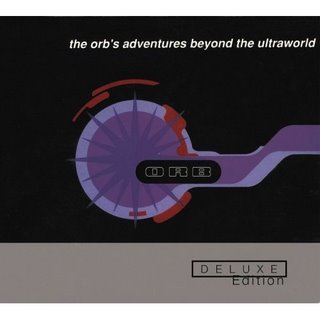
Island/Universal Records have released a 15th anniversary, 3-disc special edition of The Orb's debut album, Adventures Beyond The Ultraworld. Mm-hm, Mm-hm--O.K., yeah, anniversary edition.....AAAAAACK! That album's been out for 15 YEARS!!! Anyone else remember when it was released? The first time I heard Little Fluffy Clouds was in '90 on WWUH's "Greatest Show From Earth" programme. If memory serves me correctly (which it prolly doesn't)--they played the entire first disc straight through...good times!

21 July 2006
Daughter Of Cinema Corner
25 Tammuz 5766
Right....so the other film I watched last weekend is Neil Marshall's The Descent. I had been curious about it since it was released in the theatre last year. Pixie's not a horror-film fan, so I agreed to watch it while she was doing some housework upstairs and away from the TV.
The story concerns a group of daredevil, adrenaline-junkie women who spelunk in the wrong cave at the wrong time. The film opens with a few of the women white-water rafting in Scotland. Juno (Natalie Mendoza), the sole American and "alpha-female" of the pack..Sarah (Shauna MacDonald), the level-headed Scotswoman and Sam (MyAnna Buring), a somewhat timid but adventurous Scandinavian. While returning home after the rafting--Sarah and her husband and daughter are involved in an horrific car accident, leaving her hospitalised and the others dead (her daughter dying quite violently). Juno high-tails back to The States (much is made of this later in the film)--and Sarah takes a year to pick up the pieces.
 Juno reconvenes the group somewhere in the Appalachian mountains for a weekend of adventure. Each of the original three add another member to the group. Sarah is joined by Beth (Alex Reid), a schoolteacher and close friend. Sam brings her sister Rebecca (Saskia Mulder) and Juno invites Holly (Nora-Jane Noone), a spritely obnoxious Irish daredevil who enjoys scaling cathdrals and tall buildings. After a night of bonding over alcohol and macho girl-talk, they wake early and set off, follwing Juno's directions to the cave they will explore.
A fairly simple descent into the main chamber of the cave is undertaken. Juno somehow knows that the only way out of it is through a small tunnel at one side. They struggle through, but a panicky moment happens when Sarah becomes stuck. The rest of the group pull her to safety, just as the tunnel collapses, trapping them underground. While going over their options, one being that the local authorities will know they are down there and come to find them after a certain time, Juno reveals that they aren't in the "local tourist cave"--but an "unknown system". When confronted by the others as to why, she offers the feeble reason of "wanting to claim this place for us..for Sarah".
It's decided that they should press on and try to find another way out of the system. Soon, a bit of Lovecraftian paranoia descends when Sarah starts hearing strange chirruping sounds, then sees "a man" in one of the tunnels. The others, especially Juno, dismiss these as hallucinations and they continue making their way through the cave. A harrowing sequence occurs when they have to cross a deep chasm with just a couple of ropes--but everyone survives. Holly, thinking she's discovered the way out--slips into a hole and severly breaks her leg--leading to a gruesome scene where one of the group (Rebecca, maybe?) has to try and place Holly's broken bone back inside of her leg to splint it. They soon find themselves inside another large chamber and their flashlights are starting to fail. And then that chirruping noise starts again.
In one of the cleverest moments in the film--one of the group is looking through the night-vision screen of Holly's digital-video camera--when the "man" is seen standing just behind Juno. Only, it's not a man--it's like a cross between one of the orcs from "Lord Of The Rings" and the "Lamprey-Man" from "The X-Files". It scrambles up the cave wall and disappears into the dark. The girls try to make a break for it--but, of course, with Holly being injured and "the slow one"--she is attacked by the creature and becomes the first victim of the cave. There's a bit of a "Scooby-Doo" moment where the rest of the group become separated and Sarah loses conciousness. It also transpires that there isn't just one creature--but a whole tribe of them living in the cave.
The rest of the film covers the attempts of the remaining group to escape the cave while battling or avoiding the creatures. Juno gets tough and Sarah wakes up in the creatures' feeding pit, littered with the bones of their former victims, and gets tough herself. There is the usual "picked off one by one" element of a lot of horror films--but "The Descent" tries to depict that in a novel way as well. Throw in a couple of decent homages to other films (namely Carrie and Apocalypse Now) and a whole lotta symbolism (Sarah is metaphorically "re-born" not once, but twice in the film...and what about the name "Juno"--when the rest have monikers like 'Rebecca' and 'Beth'). I won't let on about the ending, in case you want to watch it--but it does throw you at first.
Overall, despite a couple of horror-film cliches (the "one-by-one" thing and the "foolhardy" member of the group who gets it first)--I liked "The Descent". The cast of (relative) unknowns held down the acting front and the suspense and direction seemed excellent to me. Even the CGI creature moments didn't look that bad. I watched this in the afternoon with the windows open and it still managed to creep me out. Well done, Mr. Marshall and cast!
Right....so the other film I watched last weekend is Neil Marshall's The Descent. I had been curious about it since it was released in the theatre last year. Pixie's not a horror-film fan, so I agreed to watch it while she was doing some housework upstairs and away from the TV.
The story concerns a group of daredevil, adrenaline-junkie women who spelunk in the wrong cave at the wrong time. The film opens with a few of the women white-water rafting in Scotland. Juno (Natalie Mendoza), the sole American and "alpha-female" of the pack..Sarah (Shauna MacDonald), the level-headed Scotswoman and Sam (MyAnna Buring), a somewhat timid but adventurous Scandinavian. While returning home after the rafting--Sarah and her husband and daughter are involved in an horrific car accident, leaving her hospitalised and the others dead (her daughter dying quite violently). Juno high-tails back to The States (much is made of this later in the film)--and Sarah takes a year to pick up the pieces.
 Juno reconvenes the group somewhere in the Appalachian mountains for a weekend of adventure. Each of the original three add another member to the group. Sarah is joined by Beth (Alex Reid), a schoolteacher and close friend. Sam brings her sister Rebecca (Saskia Mulder) and Juno invites Holly (Nora-Jane Noone), a spritely obnoxious Irish daredevil who enjoys scaling cathdrals and tall buildings. After a night of bonding over alcohol and macho girl-talk, they wake early and set off, follwing Juno's directions to the cave they will explore.
A fairly simple descent into the main chamber of the cave is undertaken. Juno somehow knows that the only way out of it is through a small tunnel at one side. They struggle through, but a panicky moment happens when Sarah becomes stuck. The rest of the group pull her to safety, just as the tunnel collapses, trapping them underground. While going over their options, one being that the local authorities will know they are down there and come to find them after a certain time, Juno reveals that they aren't in the "local tourist cave"--but an "unknown system". When confronted by the others as to why, she offers the feeble reason of "wanting to claim this place for us..for Sarah".
It's decided that they should press on and try to find another way out of the system. Soon, a bit of Lovecraftian paranoia descends when Sarah starts hearing strange chirruping sounds, then sees "a man" in one of the tunnels. The others, especially Juno, dismiss these as hallucinations and they continue making their way through the cave. A harrowing sequence occurs when they have to cross a deep chasm with just a couple of ropes--but everyone survives. Holly, thinking she's discovered the way out--slips into a hole and severly breaks her leg--leading to a gruesome scene where one of the group (Rebecca, maybe?) has to try and place Holly's broken bone back inside of her leg to splint it. They soon find themselves inside another large chamber and their flashlights are starting to fail. And then that chirruping noise starts again.
In one of the cleverest moments in the film--one of the group is looking through the night-vision screen of Holly's digital-video camera--when the "man" is seen standing just behind Juno. Only, it's not a man--it's like a cross between one of the orcs from "Lord Of The Rings" and the "Lamprey-Man" from "The X-Files". It scrambles up the cave wall and disappears into the dark. The girls try to make a break for it--but, of course, with Holly being injured and "the slow one"--she is attacked by the creature and becomes the first victim of the cave. There's a bit of a "Scooby-Doo" moment where the rest of the group become separated and Sarah loses conciousness. It also transpires that there isn't just one creature--but a whole tribe of them living in the cave.
The rest of the film covers the attempts of the remaining group to escape the cave while battling or avoiding the creatures. Juno gets tough and Sarah wakes up in the creatures' feeding pit, littered with the bones of their former victims, and gets tough herself. There is the usual "picked off one by one" element of a lot of horror films--but "The Descent" tries to depict that in a novel way as well. Throw in a couple of decent homages to other films (namely Carrie and Apocalypse Now) and a whole lotta symbolism (Sarah is metaphorically "re-born" not once, but twice in the film...and what about the name "Juno"--when the rest have monikers like 'Rebecca' and 'Beth'). I won't let on about the ending, in case you want to watch it--but it does throw you at first.
Overall, despite a couple of horror-film cliches (the "one-by-one" thing and the "foolhardy" member of the group who gets it first)--I liked "The Descent". The cast of (relative) unknowns held down the acting front and the suspense and direction seemed excellent to me. Even the CGI creature moments didn't look that bad. I watched this in the afternoon with the windows open and it still managed to creep me out. Well done, Mr. Marshall and cast!
18 July 2006
The Special Relationship : Yo Blair!

'Yo, Blair!': Overheard at the G8
Published: 18 July 2006
Bush: Yo, Blair. How are you doing? (Does he regard Mr Blair as an equal? What about 'Yo, Tony'?)
Blair: I'm just...
Bush: You're leaving?
Blair: No, no, no not yet. On this trade thingy....(inaudible) (Mr Blair is getting anxious that the World Trade Organisation is falling apart because some nations, including the US, are putting domestic interests before a worldwide free trade agreement)
Bush: Yeah, I told that to the man.
Blair: Are you planning to say that here or not?
Bush: If you want me to.
Blair: Well, it's just that if the discussion arises...
Bush: I just want some movement.
Blair: Yeah.
Bush: Yesterday we didn't see much movement.
Blair: No, no, it may be that it's not, it may be that it's impossible.
Bush: I am prepared to say it.
Blair: But it's just I think what we need to be an opposition...
Bush: Who is introducing the trade?
Blair: Angela (The German Chancellor, Angela Merkel, will lead the trade discussion. That is good for Mr Blair. She is on his side.)
Bush: Tell her to call 'em.
Blair: Yes.
Bush: Tell her to put him on, them on the spot. Thanks for the sweater it's awfully thoughtful of you.
Blair: It's a pleasure.
Bush: I know you picked it out yourself.
Blair: Oh, absolutely, in fact (inaudible)
Bush: What about Kofi? (inaudible) His attitude to ceasefire and everything else ... happens. (Change of subject. Now they are on to Lebanon and the UN secretary general, Kofi Annan)
Blair: Yeah, no I think the (inaudible) is really difficult. We can't stop this unless you get this international business agreed.
Bush: Yeah. (Mr Blair is trying to push the idea of a UN peacekeeping force in Lebanon. That 'yeah' does not sound like a wholehearted agreement)
Blair: I don't know what you guys have talked about, but as I say I am perfectly happy to try and see what the lie of the land is, but you need that done quickly because otherwise it will spiral. (Meaning: 'Please, George, let me go to the Middle East and be a world statesman')
Bush: I think Condi is going to go pretty soon. (Meaning: 'No')
Blair: But that's, that's, that's all that matters. But if you... you see it will take some time to get that together. (Meaning: 'Oh well, all right, if you don't want me to. Just a thought')
Bush: Yeah, yeah.
Blair: But at least it gives people...
Bush: It's a process, I agree. I told her your offer to... (Meaning: 'Drop it. You're not going.')
Blair: Well... it's only if I mean... you know. If she's got a..., or if she needs the ground prepared as it were... Because obviously if she goes out, she's got to succeed, if it were, whereas I can go out and just talk.
Bush: You see, the ... thing is what they need to do is to get Syria, to get Hizbollah to stop doing this shit and it's over. (Mr Bush is expressing his belief that Syria is pulling Hizbollah's strings, while Mr Blair is hinting the Syrians might be up to no good as well)
Blair: (inaudible)
Bush: (inaudible)
Blair: Syria.
Bush: Why?
Blair: Because I think this is all part of the same thing.
Bush: Yeah.
Blair: What does he think? He thinks if Lebanon turns out fine, if we get a solution in Israel and Palestine, Iraq goes in the right way... (Here they might be talking about Kofi Annan, or they may mean the Syrian President, Bashir Assad)
Bush: Yeah, yeah, he is sweet. (Mr Bush is probably being sarcastic)
Blair: He is honey. And that's what the whole thing is about. It's the same with Iraq.
Bush: I felt like telling Kofi to call, to get on the phone to Assad and make something happen.
Blair: Yeah.
Bush: (inaudible)
Blair:(inaudible)
Bush: We are not blaming the Lebanese government.
Blair: Is this...? (at this point Blair taps the microphone in front of him and the sound is cut.)
Bush: Yo, Blair. How are you doing? (Does he regard Mr Blair as an equal? What about 'Yo, Tony'?)
Blair: I'm just...
Bush: You're leaving?
Blair: No, no, no not yet. On this trade thingy....(inaudible) (Mr Blair is getting anxious that the World Trade Organisation is falling apart because some nations, including the US, are putting domestic interests before a worldwide free trade agreement)
Bush: Yeah, I told that to the man.
Blair: Are you planning to say that here or not?
Bush: If you want me to.
Blair: Well, it's just that if the discussion arises...
Bush: I just want some movement.
Blair: Yeah.
Bush: Yesterday we didn't see much movement.
Blair: No, no, it may be that it's not, it may be that it's impossible.
Bush: I am prepared to say it.
Blair: But it's just I think what we need to be an opposition...
Bush: Who is introducing the trade?
Blair: Angela (The German Chancellor, Angela Merkel, will lead the trade discussion. That is good for Mr Blair. She is on his side.)
Bush: Tell her to call 'em.
Blair: Yes.
Bush: Tell her to put him on, them on the spot. Thanks for the sweater it's awfully thoughtful of you.
Blair: It's a pleasure.
Bush: I know you picked it out yourself.
Blair: Oh, absolutely, in fact (inaudible)
Bush: What about Kofi? (inaudible) His attitude to ceasefire and everything else ... happens. (Change of subject. Now they are on to Lebanon and the UN secretary general, Kofi Annan)
Blair: Yeah, no I think the (inaudible) is really difficult. We can't stop this unless you get this international business agreed.
Bush: Yeah. (Mr Blair is trying to push the idea of a UN peacekeeping force in Lebanon. That 'yeah' does not sound like a wholehearted agreement)
Blair: I don't know what you guys have talked about, but as I say I am perfectly happy to try and see what the lie of the land is, but you need that done quickly because otherwise it will spiral. (Meaning: 'Please, George, let me go to the Middle East and be a world statesman')
Bush: I think Condi is going to go pretty soon. (Meaning: 'No')
Blair: But that's, that's, that's all that matters. But if you... you see it will take some time to get that together. (Meaning: 'Oh well, all right, if you don't want me to. Just a thought')
Bush: Yeah, yeah.
Blair: But at least it gives people...
Bush: It's a process, I agree. I told her your offer to... (Meaning: 'Drop it. You're not going.')
Blair: Well... it's only if I mean... you know. If she's got a..., or if she needs the ground prepared as it were... Because obviously if she goes out, she's got to succeed, if it were, whereas I can go out and just talk.
Bush: You see, the ... thing is what they need to do is to get Syria, to get Hizbollah to stop doing this shit and it's over. (Mr Bush is expressing his belief that Syria is pulling Hizbollah's strings, while Mr Blair is hinting the Syrians might be up to no good as well)
Blair: (inaudible)
Bush: (inaudible)
Blair: Syria.
Bush: Why?
Blair: Because I think this is all part of the same thing.
Bush: Yeah.
Blair: What does he think? He thinks if Lebanon turns out fine, if we get a solution in Israel and Palestine, Iraq goes in the right way... (Here they might be talking about Kofi Annan, or they may mean the Syrian President, Bashir Assad)
Bush: Yeah, yeah, he is sweet. (Mr Bush is probably being sarcastic)
Blair: He is honey. And that's what the whole thing is about. It's the same with Iraq.
Bush: I felt like telling Kofi to call, to get on the phone to Assad and make something happen.
Blair: Yeah.
Bush: (inaudible)
Blair:(inaudible)
Bush: We are not blaming the Lebanese government.
Blair: Is this...? (at this point Blair taps the microphone in front of him and the sound is cut.)
One thinks of poodles, lap-dogs and something rotten in the state of Britain.
In Praise of Great Men
I recently received an e-mail from my old mate and musical partner, Tony, who told how his dad is suffering badly from the effects of Parkinson's Disease. If I'm not mistaken, Tone's dad must be about 80 years old or so and comes from the generation who saw Britain through the Second World War. Tone described how his dad, who now lives in residential accommation for older people, struggles every day to smoke a cigarette (having had to give up his beloved pipe) and shuffles painfully down the corridor to reach the garden where he can enjoy his puff of tobacco. What struck me was the utter determination and indomitable spirit of Tone's old dad. Happily, my own dad, who comes from the same generation, enjoys greater independence at the moment than Tony's dad, although he has had a lot health difficulties himself of late. This led me to think about people like Tony's dad and my dad and how much they have lived through, what they have taught us and how different our 'Baby-Boomer' generation is from theirs.
My father was born in 1928, around the time of the Great Depression, and was brought up in a large family in inner-city Bristol. My Grandparents, if not poverty stricken, were certainly poor; although my Grandfather, who had served in the Royal Navy, was usually fortunate enough to be in employment, having taken up the engineering trade. My dad was too young to join the forces during the war and spent the war years either dodging bombs and shapnel in Bristol (missing out on most of his schooling in the process) or as an evacuee in Devon and South Wales. I know that Tone's dad, being a few years older, earned the Burma Star for his war service in the Far East.
Having tried, unsuccessfully, to join the air force prior to the end of the war (he was too young) Dad signed up at a regular soldier with the Grenadier Guards around 1946. He didn't want to be a conscript, so he volunteered a for a long stint serving King and country.
Within a year my dad was with the British forces in Palestine, trying to keep the peace as part of the British mandate in the Middle East. He has told me a few stories of his time there but, like most old servicemen of that period, you never really get to learn much. I know he would have to go on patrol in what was then known as Trans-Jordan and I know friends of his never came back from this tour of duty. He was back for a while, though I'm not sure how long, and then he was shipped (literally) out to Malaya where he spent the best part of three years fighting Chinese Communist forces. Again, he told me about his pet monkey, how bloody hot it was, what sort of creepy-crawlies they had to contend with etc. but nothing really 'juicy'. I have been dumb enough to ask how it feels to know you have killed someone and he just doesn't answer. Why was I surprised? Anyway, once this lot was over with, things slowed down a bit and he was posted to Germany for a while. In between some of these stints he had the 'honour' of guarding the Queen at Buckingham Palace and Windsor Castle and looked after her jewellery at the Tower of London. As a child I was always proud to see pictures of him in his ceremonial uniform of bear-skin and red tunic. I still am. He was in the band and learned to play the flute and he was 'fortunate' enough to have taken part in Trooping The Colour a few times. There are quite a few more stories from these times, some of them funny, some not so. Life in the British army was extremely hard in those days. My dad was never over-ambitious and only ever made it to corporal, so he and his colleagues was basically treated like 'scum' by the higher NCO's and officers. Consequently, he has very little time for such concepts as 'prison reform', having, he feels, volunteered for something far worse than prison! I'm sure Tony's dad would say much the same thing. My father also despised the officer class as they were, more often than not, a 'bunch of upper-class twits', drawn from our 'finest' public schools.
My dad served a total of 12 years in the Guards. He had intented to sign-on for much longer but had to leave due to ill-health. Inspite of all the hardship and danger, I'm certain he considers these times to be the best of his life. I always feel that he has never quite adjusted back to life on 'Civvie Street' in all these long years. The army made him a man. It certainly had a knock-on effect on how my brother and I were raised and not all for the good. My dad, like most of his generation, is a strong traditionalist and whilst he was still a relatively young fellow during the 1960's, he has never had any time at all for the 'drop-out' ethos. You had to work for a living and if you lost your job you got out there and found another one. He has done just about everything you can imagine to earn a crust: mechanic, bus driver, milkman, cleaner (like Tone's dad), delivery man etc. etc. etc.. Politically, he is, like many working class men of his time, a socialist with some decidedly right wing leanings. Which doesn't make him a 'fascis't but, rather, a product of his life experience. He believes in personal responsiblity and self sufficiency. He hates scroungers and free-loaders. Naturally, I have not always seen eye to eye with him politically but, as I grow older myself, I have begun to understand his stance on many issues. Also, I'd have to say that he has not always been a 'perfect' husband for my mother but I'm sure she would defend him to the hilt and say that she knows he loves her and has done things the way he knows best.
How do us 'Baby Boomers' compare to the likes of Tony's dad and my dad? I'm afraid I have to say we just 'don't'. I suppose we are largely more enlightened on certain social issues (for what good that has done us) and we may have what seems like a more enquiring out-look on the world beyond our own shores (but who would want to travel and meet people when you've been made to do just that only to kill them?). We have had the benefits of vast improvements in state education, free access to higher education, a national health service that was 'the envy of the world' (sic) and the freedom and cash to relish the cultural experiments of the 60's and 70's. What have we done with our inheritance? Well, it's our generation who are largely in control of things now and the country appears to be decending into chaos. I know that my parents look on in total confusion and dismay as the country they fought for and loved becomes an alien society to them. We have squandered the opportunities that the previous generation gave to us and I fear it may be too late to dig ourselves out of this hole. Where once there were moral certainties (even if these were far from perfect) now we are the hostages to a 'relativism' which allows dangerous criminals to walk the streets, gangs of youths to frighten old people half to death and benefit scroungers to declare that it is their 'right' to have their near-feral children subsidised by the tax payer. Thank God we have never been called upon to defend our nation from totalitarian evil: we just don't have the backbone. If Hitler came back today we'd be in jackboots before you could blink. Maybe the next generation, the one of our own children, can raise themselves up in almost Blakean prophetic style and save us all.
Thank the Lord for Tone's dad, my dad and lots of other dads of their generation.
My father was born in 1928, around the time of the Great Depression, and was brought up in a large family in inner-city Bristol. My Grandparents, if not poverty stricken, were certainly poor; although my Grandfather, who had served in the Royal Navy, was usually fortunate enough to be in employment, having taken up the engineering trade. My dad was too young to join the forces during the war and spent the war years either dodging bombs and shapnel in Bristol (missing out on most of his schooling in the process) or as an evacuee in Devon and South Wales. I know that Tone's dad, being a few years older, earned the Burma Star for his war service in the Far East.
Having tried, unsuccessfully, to join the air force prior to the end of the war (he was too young) Dad signed up at a regular soldier with the Grenadier Guards around 1946. He didn't want to be a conscript, so he volunteered a for a long stint serving King and country.
Within a year my dad was with the British forces in Palestine, trying to keep the peace as part of the British mandate in the Middle East. He has told me a few stories of his time there but, like most old servicemen of that period, you never really get to learn much. I know he would have to go on patrol in what was then known as Trans-Jordan and I know friends of his never came back from this tour of duty. He was back for a while, though I'm not sure how long, and then he was shipped (literally) out to Malaya where he spent the best part of three years fighting Chinese Communist forces. Again, he told me about his pet monkey, how bloody hot it was, what sort of creepy-crawlies they had to contend with etc. but nothing really 'juicy'. I have been dumb enough to ask how it feels to know you have killed someone and he just doesn't answer. Why was I surprised? Anyway, once this lot was over with, things slowed down a bit and he was posted to Germany for a while. In between some of these stints he had the 'honour' of guarding the Queen at Buckingham Palace and Windsor Castle and looked after her jewellery at the Tower of London. As a child I was always proud to see pictures of him in his ceremonial uniform of bear-skin and red tunic. I still am. He was in the band and learned to play the flute and he was 'fortunate' enough to have taken part in Trooping The Colour a few times. There are quite a few more stories from these times, some of them funny, some not so. Life in the British army was extremely hard in those days. My dad was never over-ambitious and only ever made it to corporal, so he and his colleagues was basically treated like 'scum' by the higher NCO's and officers. Consequently, he has very little time for such concepts as 'prison reform', having, he feels, volunteered for something far worse than prison! I'm sure Tony's dad would say much the same thing. My father also despised the officer class as they were, more often than not, a 'bunch of upper-class twits', drawn from our 'finest' public schools.
My dad served a total of 12 years in the Guards. He had intented to sign-on for much longer but had to leave due to ill-health. Inspite of all the hardship and danger, I'm certain he considers these times to be the best of his life. I always feel that he has never quite adjusted back to life on 'Civvie Street' in all these long years. The army made him a man. It certainly had a knock-on effect on how my brother and I were raised and not all for the good. My dad, like most of his generation, is a strong traditionalist and whilst he was still a relatively young fellow during the 1960's, he has never had any time at all for the 'drop-out' ethos. You had to work for a living and if you lost your job you got out there and found another one. He has done just about everything you can imagine to earn a crust: mechanic, bus driver, milkman, cleaner (like Tone's dad), delivery man etc. etc. etc.. Politically, he is, like many working class men of his time, a socialist with some decidedly right wing leanings. Which doesn't make him a 'fascis't but, rather, a product of his life experience. He believes in personal responsiblity and self sufficiency. He hates scroungers and free-loaders. Naturally, I have not always seen eye to eye with him politically but, as I grow older myself, I have begun to understand his stance on many issues. Also, I'd have to say that he has not always been a 'perfect' husband for my mother but I'm sure she would defend him to the hilt and say that she knows he loves her and has done things the way he knows best.
How do us 'Baby Boomers' compare to the likes of Tony's dad and my dad? I'm afraid I have to say we just 'don't'. I suppose we are largely more enlightened on certain social issues (for what good that has done us) and we may have what seems like a more enquiring out-look on the world beyond our own shores (but who would want to travel and meet people when you've been made to do just that only to kill them?). We have had the benefits of vast improvements in state education, free access to higher education, a national health service that was 'the envy of the world' (sic) and the freedom and cash to relish the cultural experiments of the 60's and 70's. What have we done with our inheritance? Well, it's our generation who are largely in control of things now and the country appears to be decending into chaos. I know that my parents look on in total confusion and dismay as the country they fought for and loved becomes an alien society to them. We have squandered the opportunities that the previous generation gave to us and I fear it may be too late to dig ourselves out of this hole. Where once there were moral certainties (even if these were far from perfect) now we are the hostages to a 'relativism' which allows dangerous criminals to walk the streets, gangs of youths to frighten old people half to death and benefit scroungers to declare that it is their 'right' to have their near-feral children subsidised by the tax payer. Thank God we have never been called upon to defend our nation from totalitarian evil: we just don't have the backbone. If Hitler came back today we'd be in jackboots before you could blink. Maybe the next generation, the one of our own children, can raise themselves up in almost Blakean prophetic style and save us all.
Thank the Lord for Tone's dad, my dad and lots of other dads of their generation.
16 July 2006
Cinema Corner
27 Asadha - 1928 Saka Era
I rarely go to the movies anymore--a lot of times the sludge coming out of Hollywood just doesn't seem worth handing over £8 for. There are some films that I would like to catch on the big screen, but since I've been working most weekends lately, I don't feel like heading over to the cinema after eight hours at the job. Plus, Saturday nights are when John and Jane Q. Public all want to see a film--and I'd rather avoid the large crowds.
Pixie and I often say, about certain films, "Yeah, let's rent that when it's out in the video shop", but then we forget about them when they are released for rental. This past weekend, we actually had the time and made the effort to check out what's new in the shop. We nearly rented Capote, with Philip Seymour Hoffman as good ol' Truman--but Pixie wasn't up "for anything heavy". Confetti, the wedding mockumentary in the style of Best In Show and The Office, hasn't been released yet, so that scuppered that. In the end, we settled for Broken Flowers, the Jim Jarmusch "comedy" with Bill Murray, Sharon Stone and Jessica Lange--and I chose The Descent, the Neil Marshall horror flick set in a cave, 'cos I've been meaning to see it for a while now.
 "Broken Flowers" features Murray, in his now-familiar 'old-guy-sad-sack' mode, as Don Johnston ("with a 't'"--as it becomes a running gag about his surname's similarity to the "Miami Vice" actor's name). Johnston's current girlfriend, played by Julie Delpy, is leaving him, for a reason that isn't explained. The same day, he receives a type-written letter from one of his ex-lovers, explaining that she had a child by him 19 years previous--and this child, a son, is looking for his father. Johnston isn't very intrigued by the letter, but shows it to his neighbour, Winston (played with dopey amiability by Jeffrey Wright).
Winston sees this as an opportunity for Johnston to "live his life", as Johnston mainly just sits around his house watching television. Winston convinces Johnston to make a list of his lovers from 20 years ago and with some internet research--tracks down five possible "suspects" for the letter-sender. He draws up an itenerary for Don to go and visit his former flames and try and figure out which could be his offspring's mother. Johnston, naturally, thinks his neighbor's idea is crazy--but goes along with it, possibly temporarily caught up in Winston's enthusiasm.
The "road movie" portion of the film follows--with Johnston visiting, in turn, four of the five women. Sharon Stone's race car driver's widow is first (living with her aptly-monikered young daughter Lolita). Dora (Frances Conroy) is next, who's now a pre-fab real estate agent, with her husband, an obnoxious 'Noughties' version of a yuppie. Then he sees Jessica Lange's "pet counselor", and she's one of the least impressed with seeing Don after all that time. He then travels to an out-of-the-way farmhouse--which appears to be some sort of biker commune. He confronts Penny (Tilda Swinton), but her reaction proves more hostile than Lange's Carmen--and Don is then beaten up by a couple of Penny's biker friends, who call Johnston "rude". As a last sojourn on the futile trip, he visits the grave of Michelle, another of his loves from around that time, who died in an automobile accident.
Johnston returns home, still unclear about who could've sent the letter. He sees a young man, loaded up with a large duffle bag, at the airport. The next day, after meeting Winston at their favourite cafe, he sees the young man outside--and offers to buy him a sandwich. They end up talking about philosophy and Johnston starts thinking that this may be his son. He asks the young man about his father--which gets a bad reaction--then Johnston blurts out "Look, I know I may be your father..." The young man runs off and Johnston follows him, but loses him soon after. Johnston is left standing in the street, while the camera circles him and a car goes by--with another young man staring at him out of the passenger-side window.
This being a Jarmusch film, the plot never really gets resolved. There's a sub-plot where Sherry sends a letter in the exact same envelope and hand-written on the same paper--but that only adds to the ambiguity. The acting seems O.K. to me, but I'm starting to wish Murray would do a "zany" role again. Aside from a few moments in The Life Aquatic With Steve Zissou, he's been playing the sad-sack thing for quite some time now. It's really tough to imagine 'Don Johnston' as the lothario that the film insists he is. If he had as many lovers as the plot contrives--he must've been the "Rohypnol King of '86"--'cos I don't think he got by on charm alone. Still...worth a rental.
I rarely go to the movies anymore--a lot of times the sludge coming out of Hollywood just doesn't seem worth handing over £8 for. There are some films that I would like to catch on the big screen, but since I've been working most weekends lately, I don't feel like heading over to the cinema after eight hours at the job. Plus, Saturday nights are when John and Jane Q. Public all want to see a film--and I'd rather avoid the large crowds.
Pixie and I often say, about certain films, "Yeah, let's rent that when it's out in the video shop", but then we forget about them when they are released for rental. This past weekend, we actually had the time and made the effort to check out what's new in the shop. We nearly rented Capote, with Philip Seymour Hoffman as good ol' Truman--but Pixie wasn't up "for anything heavy". Confetti, the wedding mockumentary in the style of Best In Show and The Office, hasn't been released yet, so that scuppered that. In the end, we settled for Broken Flowers, the Jim Jarmusch "comedy" with Bill Murray, Sharon Stone and Jessica Lange--and I chose The Descent, the Neil Marshall horror flick set in a cave, 'cos I've been meaning to see it for a while now.
 "Broken Flowers" features Murray, in his now-familiar 'old-guy-sad-sack' mode, as Don Johnston ("with a 't'"--as it becomes a running gag about his surname's similarity to the "Miami Vice" actor's name). Johnston's current girlfriend, played by Julie Delpy, is leaving him, for a reason that isn't explained. The same day, he receives a type-written letter from one of his ex-lovers, explaining that she had a child by him 19 years previous--and this child, a son, is looking for his father. Johnston isn't very intrigued by the letter, but shows it to his neighbour, Winston (played with dopey amiability by Jeffrey Wright).
Winston sees this as an opportunity for Johnston to "live his life", as Johnston mainly just sits around his house watching television. Winston convinces Johnston to make a list of his lovers from 20 years ago and with some internet research--tracks down five possible "suspects" for the letter-sender. He draws up an itenerary for Don to go and visit his former flames and try and figure out which could be his offspring's mother. Johnston, naturally, thinks his neighbor's idea is crazy--but goes along with it, possibly temporarily caught up in Winston's enthusiasm.
The "road movie" portion of the film follows--with Johnston visiting, in turn, four of the five women. Sharon Stone's race car driver's widow is first (living with her aptly-monikered young daughter Lolita). Dora (Frances Conroy) is next, who's now a pre-fab real estate agent, with her husband, an obnoxious 'Noughties' version of a yuppie. Then he sees Jessica Lange's "pet counselor", and she's one of the least impressed with seeing Don after all that time. He then travels to an out-of-the-way farmhouse--which appears to be some sort of biker commune. He confronts Penny (Tilda Swinton), but her reaction proves more hostile than Lange's Carmen--and Don is then beaten up by a couple of Penny's biker friends, who call Johnston "rude". As a last sojourn on the futile trip, he visits the grave of Michelle, another of his loves from around that time, who died in an automobile accident.
Johnston returns home, still unclear about who could've sent the letter. He sees a young man, loaded up with a large duffle bag, at the airport. The next day, after meeting Winston at their favourite cafe, he sees the young man outside--and offers to buy him a sandwich. They end up talking about philosophy and Johnston starts thinking that this may be his son. He asks the young man about his father--which gets a bad reaction--then Johnston blurts out "Look, I know I may be your father..." The young man runs off and Johnston follows him, but loses him soon after. Johnston is left standing in the street, while the camera circles him and a car goes by--with another young man staring at him out of the passenger-side window.
This being a Jarmusch film, the plot never really gets resolved. There's a sub-plot where Sherry sends a letter in the exact same envelope and hand-written on the same paper--but that only adds to the ambiguity. The acting seems O.K. to me, but I'm starting to wish Murray would do a "zany" role again. Aside from a few moments in The Life Aquatic With Steve Zissou, he's been playing the sad-sack thing for quite some time now. It's really tough to imagine 'Don Johnston' as the lothario that the film insists he is. If he had as many lovers as the plot contrives--he must've been the "Rohypnol King of '86"--'cos I don't think he got by on charm alone. Still...worth a rental.
13 July 2006
Hey Man, Let's Get S-M-A-L-L-L-L
63-2-102 A.N. (Thelemic)
I received an e-mail from Antares over at Magick River. He sent a very interesting comparison study. Check this out. Like, whoa doooode. Nice modeling work to whomever crafted those things--Earth itself must've taken ages to complete.
I received an e-mail from Antares over at Magick River. He sent a very interesting comparison study. Check this out. Like, whoa doooode. Nice modeling work to whomever crafted those things--Earth itself must've taken ages to complete.
11 July 2006
Syd Barrett's Final Trip
20 Tir-Mordad - Year 1385
I just read Bear's post and I'm gutted. I felt I had to weigh in with my own tribute--as Pink Floyd are one of my all-time favourite bands.
If you didn't know already, Syd Barrett, one of the founders of Pink Floyd passed away this past Friday. He was 60 years old. His brother, Alan Barrett, reported the news today.
His story has been told, re-told (and exaggerated) often. I'll do my own sorta rambling "Cliff Notes" version here.
Roger Keith Barrett was born on January 6th, 1946 (Gregorian) in Cambridgeshire, UK. Not a lot is known about his childhood, but he did attend art school in Cambridge. He picked up the guitar, often jamming with his friend David Gilmour (who, somewhat ironically, would replace him in the Floyd). He moved to London in his late teens--and met up with another old school friend, Roger Waters. Waters was playing in a band (with various names like The T-Set, The Architectural Abdabs, The Megadeaths) and decided he needed a new face, so Syd was invited in on the lead guitar post. They churned through the typical set of blues and R&B covers, even recording a single, Lucy Leave b/w King Bee, in 1965.
Syd also began to dabble with psychedelics at this point, mostly marijuana--but in summer 1966, he went to the Gog Magog hills, ate some hallucinogenic mushrooms--and the UK's first psychedelic superstar was born. The band hit the nascent London underground scene, bouyed by Barrett's new compositions. They were far-removed from 12-bar blues...incorporating trippy light shows and improvised "freak-outs", reflecting Floyd's front man's mind-expansions. They soon became the "house band" of the new sound, with few rivals (except maybe The Soft Machine).
Maverick young producer Joe Boyd spotted them at a show and offered some studio time. Barrett responded with what is considered the crown jewel of UK psychedelic pop, Arnold Layne. Released in March 1967, it's unique lyrical content (about a transvestite who recieves a harsh sentence from the law when caught) and production saw it make the charts. Syd' vocals were also distinctive and have been imitated by may others, most notably Robyn Hitchcock and Colin Newman of Wire. "Arnold Layne"s success was proof of Barrett's mastery of combining words and melody.
The Floyd's first full-length (after their See Emily Play single 'sound-tracked' the fabled "Summer Of Love") album, The Piper At The Gates Of Dawn, was released in August 1967. So forward-looking was this collection that some of it's studio trickery still hasn't been surpassed. Barrett's capabilities were at their height, with psychedelic pop whimsy like Mathilda Mother and The Gnome alongside classic freak-outs like Pow R. Toch and their signature jam, Interstellar Overdrive. "The Piper..." formed a UK psychedelic triptych with the Beatles' Sgt. Pepper's.. and The Pretty Things' S.F. Sorrow--for being the top psych records of any era. Pink Floyd and Syd were the toast of the underground, but all of the attention and a mammoth LSD intake started to unravel Barrett very quickly.
A disastrous U.S. tour in autumn '67 confirmed the band's fears that Syd was "coming unglued"--especially the much-reported "Mandrax-in-the-hair" incident and Barrett's de-tuning his guitar on-stage. In early 1968, it was decided that he would function as a Brian Wilson type figure, writing and recording but not touring with the band. Replacements were sought out, including Davy O'List of The Nice--but eventually they asked Barrett's old Cambridge mate, David Gilmour. A few shows were played as a five-piece, but by this point, Syd had no interest in the pop-star treadmill--and he elected to leave the band altogether, after two of his singles written for the group, Vegetable Man and Scream Thy Last Scream, were rejected for release. His last recorded moment with Pink Floyd is Jugband Blues, on the '68 album, Saucerful Of Secrets--and ends with the haunting lines "...and what exactly is a dream/and what exactly is a joke?..."
A year later Barrett would enter the studio for his first solo album, The Madcap Laughs--but by this time, he was so debilitated that he couldn't keep a song in the same key for more than one take and the sessions were reaching epic false-take proportions. Gilmour and Waters (along with all of The Soft Machine) stepped in to help complete the record and it was released in January 1970. The sparse love songs and trippy puzzled missives made for uneasy listening and failed to spark off Syd's solo career, though he was allowed to follow up "Madcap.." with a second set, Barrett, released in November 1970. Waters and Gilmour again helped out, but it wasn't enough and Syd moved back to Cambridge. He formed a short-lived trio called Stars with Twink (of Tomorrow and The Pink Fairies) and another mate on bass, in 1971, but it only lasted for a couple of live gigs (one opening for Hawkwind at the Cambridge Corn Exchange) and a few home recordings. After that--Syd all but retired from music and performing
Barrett's legacy continued in Pink Floyd, however, especially in Roger Waters' song-writing. His "madness" and breakdown loomed large in songs like If (on Atom Heart Mother, released in 1970), Free Four (from the Obscured By Clouds sound-track, released in 1972)--and of course, the ground-breaking song cycle/"concept" albums Dark Side Of The Moon (1973) and Wish You Were Here (1975). It's also been widely reported about Syd showing up to the studio during the sessions for "W.Y.W.H." and asking when he was going to do "his bit". He looked so completely different that the band didn't know who he was at first. Waters also based the "Pink Floyd" character, in the 1979 double-album/rock opera The Wall, partly on himself and partly on Syd. Over time, Barrett became a cult figure, mostly forgotten. In 1980, the Television Personalities had a minor hit with I Know Where Syd Barrett Lives, though they annoyed Gilmour when opening for Pink Floyd by actually telling the crowd where Barrett lived in Cambridge. Gilmour was very protective of his former friend, making sure he received his royalty cheques and checking on his health.
Barrett thankfully missed the bitter split between his former band-mates in the early 80s and kept a low profile. Interest in Floyd's founder rose again in 1990 with Nicholas Schaffner's "A Saucerful Of Secrets: A History Of Pink Floyd" book, which published new photos of the former front man. Shows for Floyd's 1994 tour started with a film of four men trying to carry a huge bust through a field--the bust's face looked a lot like the young Barrett. Periodic updates about Syd's health appeared, telling of his diabetic condition, sometimes they seemed severe. Just last year, Barrett was nearly in a coma, though he recovered after a stint in hospital.
This time, it appears the diabetes got the better of him. R.I.P. Roger Keith Barrett.
To the shining crazy diamond, the psychedelic poet of '67 and beyond, the engine of the starship that took us into interstellar overdrive--thank you for all of the music...you will be missed.

I just read Bear's post and I'm gutted. I felt I had to weigh in with my own tribute--as Pink Floyd are one of my all-time favourite bands.
If you didn't know already, Syd Barrett, one of the founders of Pink Floyd passed away this past Friday. He was 60 years old. His brother, Alan Barrett, reported the news today.
His story has been told, re-told (and exaggerated) often. I'll do my own sorta rambling "Cliff Notes" version here.
Roger Keith Barrett was born on January 6th, 1946 (Gregorian) in Cambridgeshire, UK. Not a lot is known about his childhood, but he did attend art school in Cambridge. He picked up the guitar, often jamming with his friend David Gilmour (who, somewhat ironically, would replace him in the Floyd). He moved to London in his late teens--and met up with another old school friend, Roger Waters. Waters was playing in a band (with various names like The T-Set, The Architectural Abdabs, The Megadeaths) and decided he needed a new face, so Syd was invited in on the lead guitar post. They churned through the typical set of blues and R&B covers, even recording a single, Lucy Leave b/w King Bee, in 1965.
Syd also began to dabble with psychedelics at this point, mostly marijuana--but in summer 1966, he went to the Gog Magog hills, ate some hallucinogenic mushrooms--and the UK's first psychedelic superstar was born. The band hit the nascent London underground scene, bouyed by Barrett's new compositions. They were far-removed from 12-bar blues...incorporating trippy light shows and improvised "freak-outs", reflecting Floyd's front man's mind-expansions. They soon became the "house band" of the new sound, with few rivals (except maybe The Soft Machine).
Maverick young producer Joe Boyd spotted them at a show and offered some studio time. Barrett responded with what is considered the crown jewel of UK psychedelic pop, Arnold Layne. Released in March 1967, it's unique lyrical content (about a transvestite who recieves a harsh sentence from the law when caught) and production saw it make the charts. Syd' vocals were also distinctive and have been imitated by may others, most notably Robyn Hitchcock and Colin Newman of Wire. "Arnold Layne"s success was proof of Barrett's mastery of combining words and melody.
The Floyd's first full-length (after their See Emily Play single 'sound-tracked' the fabled "Summer Of Love") album, The Piper At The Gates Of Dawn, was released in August 1967. So forward-looking was this collection that some of it's studio trickery still hasn't been surpassed. Barrett's capabilities were at their height, with psychedelic pop whimsy like Mathilda Mother and The Gnome alongside classic freak-outs like Pow R. Toch and their signature jam, Interstellar Overdrive. "The Piper..." formed a UK psychedelic triptych with the Beatles' Sgt. Pepper's.. and The Pretty Things' S.F. Sorrow--for being the top psych records of any era. Pink Floyd and Syd were the toast of the underground, but all of the attention and a mammoth LSD intake started to unravel Barrett very quickly.
A disastrous U.S. tour in autumn '67 confirmed the band's fears that Syd was "coming unglued"--especially the much-reported "Mandrax-in-the-hair" incident and Barrett's de-tuning his guitar on-stage. In early 1968, it was decided that he would function as a Brian Wilson type figure, writing and recording but not touring with the band. Replacements were sought out, including Davy O'List of The Nice--but eventually they asked Barrett's old Cambridge mate, David Gilmour. A few shows were played as a five-piece, but by this point, Syd had no interest in the pop-star treadmill--and he elected to leave the band altogether, after two of his singles written for the group, Vegetable Man and Scream Thy Last Scream, were rejected for release. His last recorded moment with Pink Floyd is Jugband Blues, on the '68 album, Saucerful Of Secrets--and ends with the haunting lines "...and what exactly is a dream/and what exactly is a joke?..."
A year later Barrett would enter the studio for his first solo album, The Madcap Laughs--but by this time, he was so debilitated that he couldn't keep a song in the same key for more than one take and the sessions were reaching epic false-take proportions. Gilmour and Waters (along with all of The Soft Machine) stepped in to help complete the record and it was released in January 1970. The sparse love songs and trippy puzzled missives made for uneasy listening and failed to spark off Syd's solo career, though he was allowed to follow up "Madcap.." with a second set, Barrett, released in November 1970. Waters and Gilmour again helped out, but it wasn't enough and Syd moved back to Cambridge. He formed a short-lived trio called Stars with Twink (of Tomorrow and The Pink Fairies) and another mate on bass, in 1971, but it only lasted for a couple of live gigs (one opening for Hawkwind at the Cambridge Corn Exchange) and a few home recordings. After that--Syd all but retired from music and performing
Barrett's legacy continued in Pink Floyd, however, especially in Roger Waters' song-writing. His "madness" and breakdown loomed large in songs like If (on Atom Heart Mother, released in 1970), Free Four (from the Obscured By Clouds sound-track, released in 1972)--and of course, the ground-breaking song cycle/"concept" albums Dark Side Of The Moon (1973) and Wish You Were Here (1975). It's also been widely reported about Syd showing up to the studio during the sessions for "W.Y.W.H." and asking when he was going to do "his bit". He looked so completely different that the band didn't know who he was at first. Waters also based the "Pink Floyd" character, in the 1979 double-album/rock opera The Wall, partly on himself and partly on Syd. Over time, Barrett became a cult figure, mostly forgotten. In 1980, the Television Personalities had a minor hit with I Know Where Syd Barrett Lives, though they annoyed Gilmour when opening for Pink Floyd by actually telling the crowd where Barrett lived in Cambridge. Gilmour was very protective of his former friend, making sure he received his royalty cheques and checking on his health.
Barrett thankfully missed the bitter split between his former band-mates in the early 80s and kept a low profile. Interest in Floyd's founder rose again in 1990 with Nicholas Schaffner's "A Saucerful Of Secrets: A History Of Pink Floyd" book, which published new photos of the former front man. Shows for Floyd's 1994 tour started with a film of four men trying to carry a huge bust through a field--the bust's face looked a lot like the young Barrett. Periodic updates about Syd's health appeared, telling of his diabetic condition, sometimes they seemed severe. Just last year, Barrett was nearly in a coma, though he recovered after a stint in hospital.
This time, it appears the diabetes got the better of him. R.I.P. Roger Keith Barrett.
To the shining crazy diamond, the psychedelic poet of '67 and beyond, the engine of the starship that took us into interstellar overdrive--thank you for all of the music...you will be missed.

Syd Barrett RIP

I have just heard the terribly sad news that founder and former leader of Pink Floyd, Syd Barrett, has died at the age of 60. Syd had suffered from diabetes for some years and, it seems, the disease finally got the better of him. Many, many words have been written about Syd and his troubles and it's a shame he is mainly known for these difficulties. Suffice to say that without him there would never have been a Pink Floyd. It was Syd's poetic soul that initially propelled the band into the psychedelic maelstrom of London in the 60's. The other band members tagged along but it was Syd who threw himself body and soul into the world of music, magic and mayhem. He never really returned from his journey but protected his fragile psyche by retreating to his childhood haven of Cambridge.
I'm not going to say that the Floyd never made a better album than 'Piper At The Gates of Dawn' but they certainly never made a more enjoyable one.
Shine on, Syd. Shine on.
10 July 2006
One For Aloicious
10 Pedole - 132 P.E.
I Photoshopped this together after seeing the original album cover a few days ago. I'll explain later. I hope Aloicious is O.K., he hasn't posted yet and we haven't heard from him.
I Photoshopped this together after seeing the original album cover a few days ago. I'll explain later. I hope Aloicious is O.K., he hasn't posted yet and we haven't heard from him.
Subscribe to:
Posts (Atom)